
Should you wash raw chicken? USDA says no, and here is why
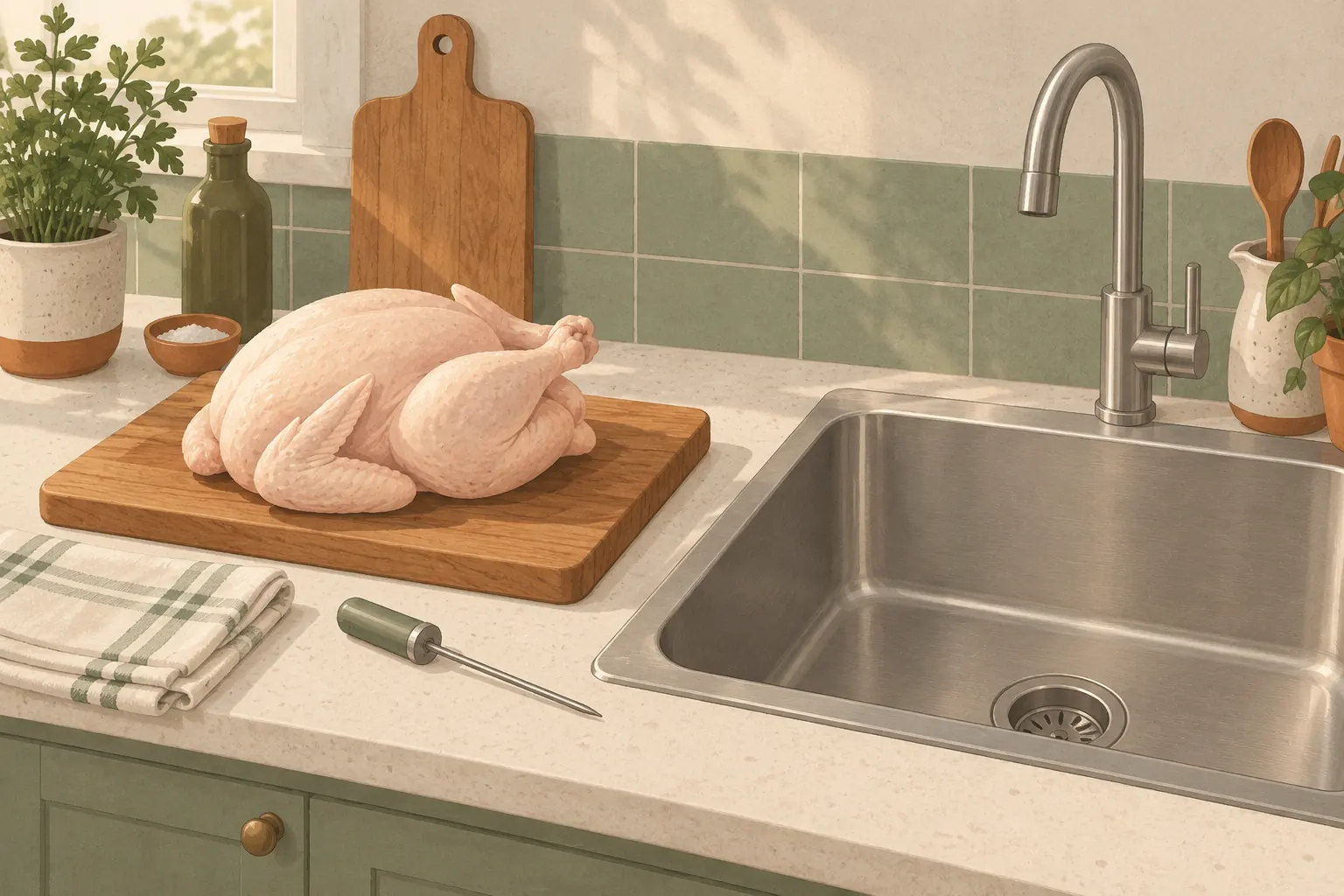
No. USDA's position is unambiguous, and the reason is not that the chicken is clean — it is that the sink is not, once you have rinsed one in it.
From Washing Food: Does it Promote Food Safety?:
From a food safety perspective, washing raw poultry, beef, pork, lamb or veal before cooking it is not recommended as the safest method. If you wash meat or poultry, some bacteria can be splashed on the surfaces of your kitchen, which can make you sick if not properly cleaned and sanitized.
The agency is blunt about where the evidence comes from: "USDA research has found that washing or rinsing meat or poultry increases the risk for cross-contamination in the kitchen."
The washing does nothing the cooking will not do
That is the other half of the sentence, and the part that makes the habit unnecessary rather than merely risky: "Cooking to the right temperature (whether frying, baking, broiling, boiling or grilling) kills germs on meat and poultry, so washing these products is risky and not necessary for safety."
So the rinse moves bacteria from a surface that is about to be heated to 165°F onto surfaces that never get heated at all — the tap, the worktop, the tea towel, the bowl of salad waiting beside the sink.
The temperatures that actually do the work
FSIS: "Using a food thermometer is the only sure way of knowing if your food has reached a high enough temperature to destroy germs."
| Food | Minimum internal temperature |
|---|---|
| Poultry — whole, parts, or ground chicken and turkey | 165°F |
| Ground meats | 160°F |
| Beef, pork, lamb, veal — steaks, roasts, chops | 145°F, then rest 3 minutes |
| Fish and seafood | 145°F, or until opaque and flaky |
For burgers the agency adds a technique note: insert the thermometer in the side of the patty, until it reaches the center.
Never soap, never detergent
One line, no qualification: "Never use soaps or detergents on your meat or poultry products. They can contaminate your food with chemicals and make it unsafe to eat."
The same applies to produce, for the same reason — soap, detergent and commercial produce washes are "not approved or labeled by the U.S. Food and Drug Administration (FDA) for use on foods."
What about brining and soaking?
Allowed, but for flavor, not safety. FSIS calls saltwater soaking "a personal preference" that "serves no purpose for food safety," and then gives the handling rules that make it safe: pour the soak out and do not reuse it, wash or dishwasher-sanitize the container, clean and sanitize the sink and any surface the used soak touched, and keep the meat in the refrigerator while it soaks.
Rinsing country ham or bacon to reduce salt does not work either: "very little salt is removed by washing, rinsing or soaking a meat product."
The three things to do instead
- Pat it dry with paper towel and bin the towel. It gets you the dry surface that browning needs without the splash.
- Clean, then sanitize — in that order. Cleaning "does not kill germs"; it removes the dirt so the sanitizer can work. FSIS's homemade cutting-board sanitizer is one tablespoon of unscented liquid chlorine bleach in a gallon of water; for surfaces and sinks, CDC's stronger ratio is one-third cup of bleach per gallon, left at least a minute before wiping. Disinfectants are for surfaces, not for boards and utensils that touch food.
- Wash your hands, 20 seconds. Before and after. The agency's timer is "Happy Birthday" twice.
Two numbers that explain the urgency: Campylobacter "can survive in your kitchen for up to 4 hours" and Salmonella "for up to 32 hours".
And the other foods people wash
- Eggs from the shop: do not. Washing already happened at the plant, and the bloom it removed was replaced with "a light coating of edible mineral oil". Washing again increases the risk, especially if the shell cracks. More on why US eggs are refrigerated and European ones are not.
- Produce: yes, under running tap water, scrubbing firm items like apples and potatoes with a brush. Cut away damaged or bruised areas, and refrigerate cut fruit and salad straight away. How to store produce covers what goes where afterwards.
- Bagged salad marked "pre-washed" or "ready-to-eat": no need. FSIS says you can use it without further washing.
- Meat packaging: bin it immediately. Foam trays, egg cartons and plastic wraps are never reused.
From the shop to the fridge
The same page carries the grocery-run version: keep raw meat, poultry and seafood separate from produce and ready-to-eat food, in their own bags; wash reusable bags after each use in hot soapy water; wash your hands after the shop; and clean the counters where the bags were put down.
Then get the perishables cold. The clock outside refrigeration is two hours, or one above 90°F, and the storage times only hold if the fridge is at 40°F or below.
Once the shopping is away, Duneed, our iPhone app, can list what you bought from a photo of the receipt, and flag the chicken as a date you give it gets close.
Common questions
Should I wash chicken before cooking it?
No. FSIS does not recommend washing raw poultry: the splash spreads bacteria around the kitchen, and cooking to 165°F kills them anyway.
What if I always wash my chicken and have never been ill?
The risk FSIS names is cross-contamination of surfaces, which causes illness later and elsewhere — not from the chicken you cooked. USDA's own research is what the recommendation rests on.
Can I wash meat with vinegar or lemon juice?
The agency lists vinegar and lemon juice among the things people use and does not recommend washing by any method. Soap and detergent are ruled out outright.
What temperature should chicken be cooked to?
165°F internal, for whole birds, parts and ground poultry alike, measured with a food thermometer.
Do I need to wash eggs?
Not eggs from a shop. They were washed at the plant, and washing again raises the risk of contamination through the shell.
Should I wash fruit and vegetables?
Yes, under running tap water, with a brush for firm items — but never with soap, detergent or a produce wash.
Is it safe to brine chicken?
Yes, as a preference rather than a safety step. Keep it refrigerated while it soaks, throw the soak away, and clean and sanitize the container and sink afterwards.
Sources
- Washing Food: Does it Promote Food Safety? fsis.usda.gov
Found a mistake? Tell us and we will correct it: support@duneed.app