
How to store produce so it lasts longer: fridge, counter or pantry
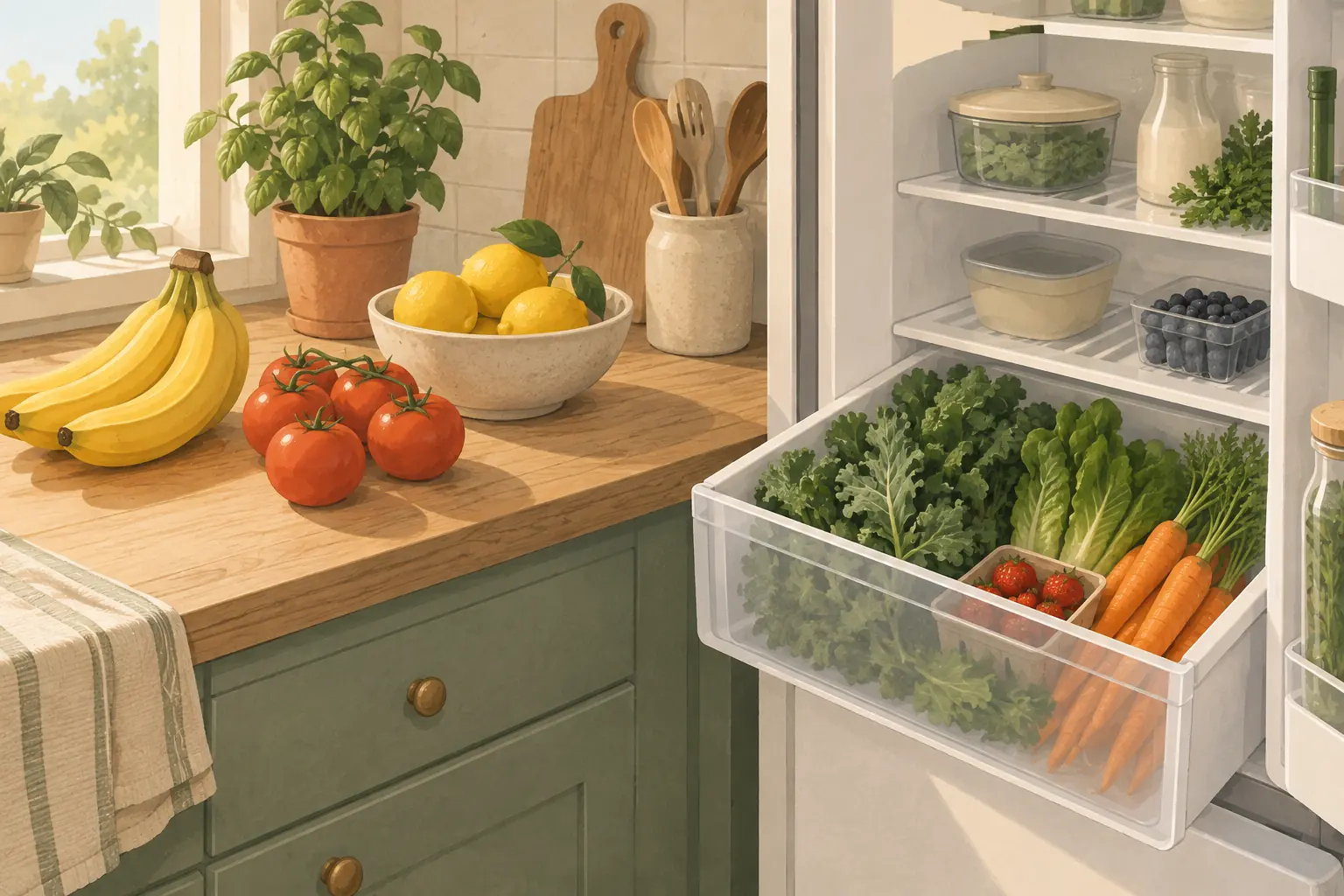
To make produce last longer, store each fruit and vegetable where it keeps best: berries, leafy greens, carrots and most other vegetables in the fridge; bananas, tomatoes, citrus, melons and potatoes at room temperature; and avocados, peaches, pears and kiwifruit on the counter until they're ripe, then in the fridge. That split comes from the University of California's Postharvest Technology Center, whose storage chart is the one below.
The mistakes run both ways: things in the fridge that belong on the counter, and things on the counter that belong in the fridge.
Produce storage chart: where each fruit and vegetable goes
From the UC Postharvest Technology Center's poster Storing Fresh Fruits and Vegetables for Better Taste (UC ANR Publication 21590):
| Where | Fruits and melons | Vegetables |
|---|---|---|
| Refrigerator | Apples (if keeping more than 7 days), apricots, Asian pears, blackberries, blueberries, cherries, cut fruit, figs, grapes, raspberries, strawberries | Artichokes, asparagus, green and lima beans, beets, Belgian endive, broccoli, Brussels sprouts, cabbage, carrots, cauliflower, celery, cut vegetables, green onions, herbs (not basil), leafy vegetables, leeks, lettuce, mushrooms, peas, radishes, spinach, sprouts, summer squash, sweet corn |
| Counter until ripe, then refrigerator | Avocados, kiwifruit, nectarines, peaches, pears, plums, plumcots | |
| Room temperature only | Apples (if eating within 7 days), bananas, grapefruit, lemons, limes, mandarins, mangoes, muskmelons, oranges, papayas, persimmons, pineapple, plantains, pomegranates, watermelons | Basil (in water), cucumbers, dry onions, eggplant, garlic, ginger, jicama, peppers, potatoes, pumpkins, sweet potatoes, tomatoes, winter squash |
Two notes from the same chart:
- Garlic, onions, potatoes and sweet potatoes belong in a well-ventilated spot in the pantry, and potatoes need protecting from light so they don't turn green.
- Cucumbers, eggplant and peppers can go in the fridge for 1 to 3 days if you'll use them soon after taking them out.
The ones people get wrong
A few items are easy to get wrong:
- Tomatoes. The chart puts them at room temperature only, on a poster whose whole subject is taste.
- Bananas, citrus and melons. Room temperature on the chart, so the fruit bowl is the right place.
- Basil. The only herb on the room-temperature list, kept in water like cut flowers. The other herbs go in the fridge.
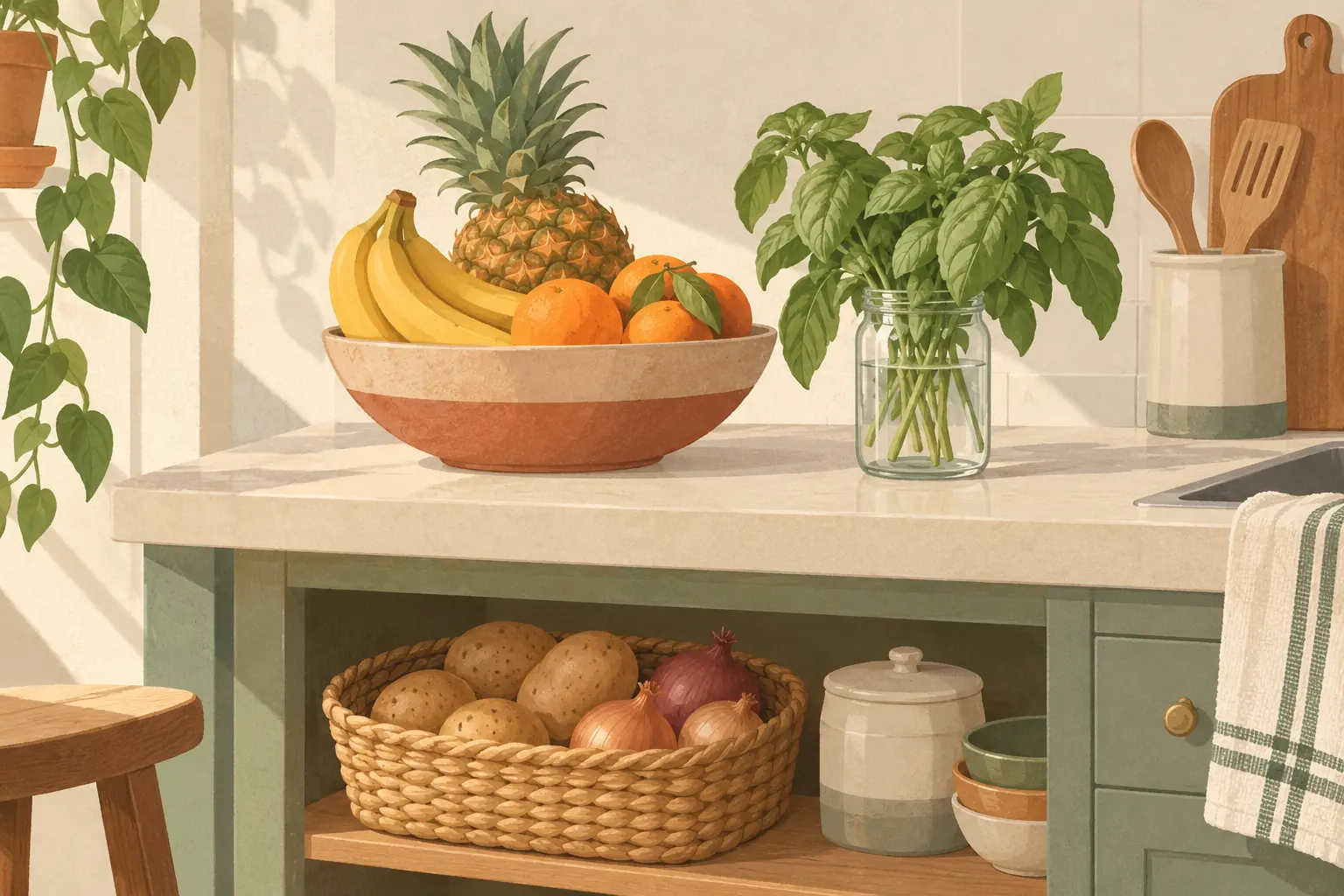
- Potatoes and onions. Pantry, not fridge, somewhere well ventilated, and dark for the potatoes.
- Apples. Either: the counter if you'll eat them within a week, the fridge if you won't.
Fridge tips that make produce last
Where produce sits inside the fridge matters too. These are our habits, not the chart's:
- Use the crisper drawers for vegetables and leafy greens, and keep the drawers for produce only.
- Don't wash berries or salad leaves until you're about to eat them. Damp produce goes soft and moldy faster.
- Keep leafy greens in their bag or a container with a dry paper towel, which takes up the extra moisture.
- Stand herbs like parsley and cilantro in a glass of water in the fridge, or wrap them loosely.
- Once a fruit on the counter is ripe, move it to the fridge. That's what the "counter until ripe" row is for.
The chart that comes with the poster also gives food handling advice worth following: keep produce apart from raw meat, poultry and seafood in the cart and at home, refrigerate cut, ready-to-eat produce, and wash whole produce just before you prepare it rather than when you put it away.
Buy less, more often
Storage only goes so far. The cheapest fix for produce that goes off is buying the amount you'll eat before it does.
- Plan the week's produce around the meals you'll actually cook. Meal planning from your pantry is a half-hour routine for it.
- Buy the fragile things (berries, salad, herbs) for the first half of the week, and the sturdy things (carrots, cabbage, apples, potatoes, onions) for the second.
- Frozen vegetables and fruit are real produce. A bag of frozen peas is there on the day the fresh spinach isn't.
- Write a use-soon note on the fridge for anything that's close. Our expiration date tracker is a one-page printable for it.
Whatever the food, the waste adds up. The EPA puts the cost of food bought and not eaten at $728 per person a year, and our food waste calculator puts a number on your own household's share. For every national figure, see food waste statistics.
Duneed, our iPhone app, adds the produce from a photographed receipt to a list of what's in the kitchen, and if you give something a date it flags it as the date gets close, so the bag of spinach comes up before it's too late to use.
Common questions
Which fruits and vegetables should not be refrigerated?
On UC Davis's chart: bananas, citrus, mangoes, melons, papayas, pineapple, persimmons, pomegranates, tomatoes, potatoes, sweet potatoes, onions, garlic, ginger, pumpkins, winter squash and basil. Cucumbers, eggplant and peppers can go in the fridge briefly if used soon after.
Should tomatoes go in the fridge?
The UC Postharvest Technology Center's chart puts tomatoes at room temperature only.
How do you keep lettuce and greens fresh longer?
Keep them in the fridge, dry, in a bag or container with a paper towel, and wash them only when you're about to eat them.
Should you wash produce before storing it?
The UC poster's handling advice is to wash whole fruits and vegetables just before preparing them. Washing and then storing leaves them damp, which shortens how long they stay fresh.
Where should potatoes and onions be stored?
In a well-ventilated place in the pantry, according to the UC chart, with potatoes kept out of the light to stop them turning green.
Sources
- Storing Fresh Fruits and Vegetables for Better Taste postharvest.ucdavis.edu
- $728 per person a year epa.gov
Found a mistake? Tell us and we will correct it: support@duneed.app