How to split groceries with roommates or a partner: six methods, with the math
How to split groceries with roommates or a partner: six methods compared, with worked examples for income and itemized splits, guests and settling up.
Practical guides for the kitchen and the grocery bill: what to keep in the pantry and how to keep track of it, how much groceries should cost for your household, what the dates on food packs actually mean, and how to read the receipt you get at the till. The inventory sheets and checklists are free to print, and the free calculators work out unit prices, grocery budgets, the cost of what gets thrown away and the cost of a recipe.
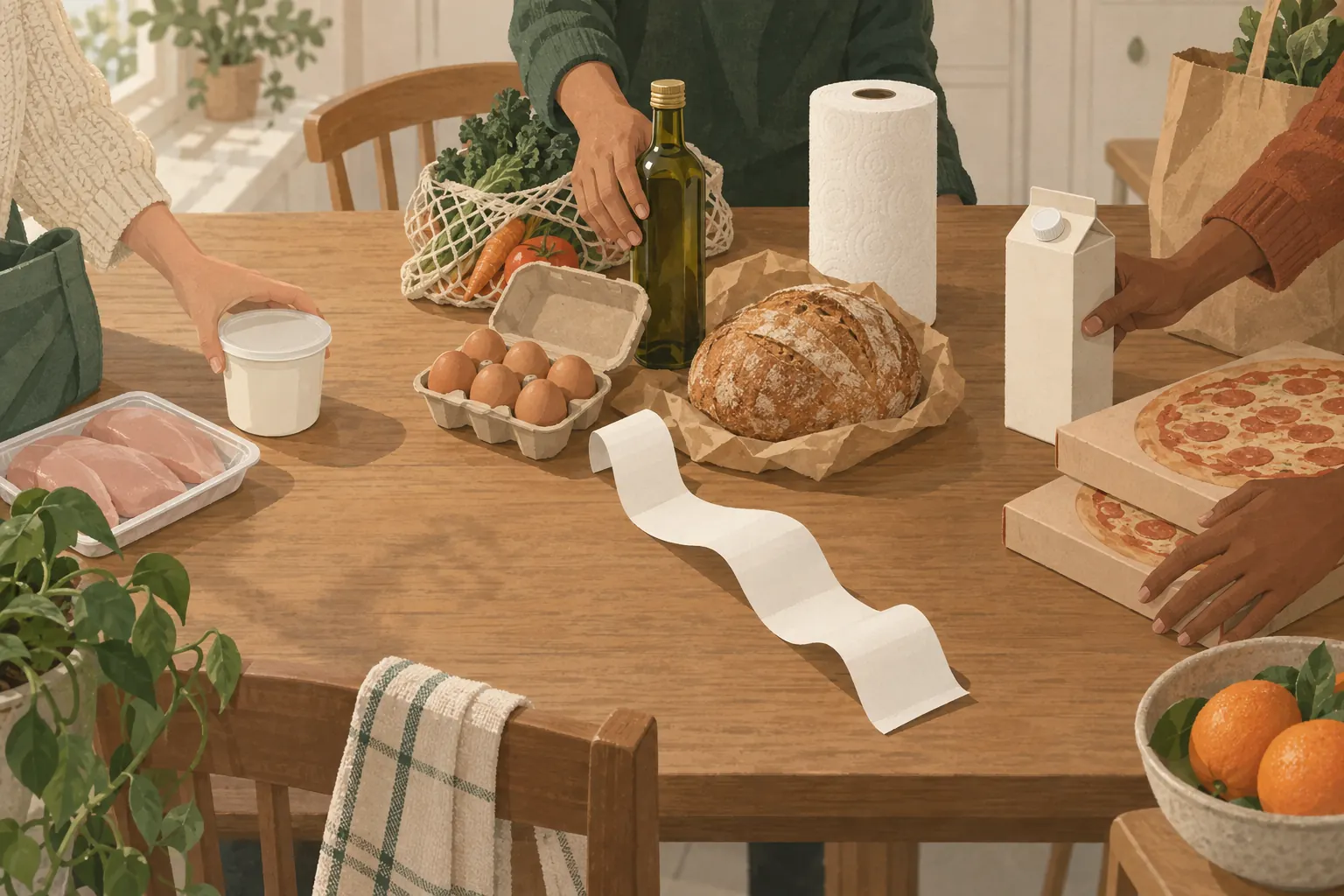
How to split groceries with roommates or a partner: six methods compared, with worked examples for income and itemized splits, guests and settling up.
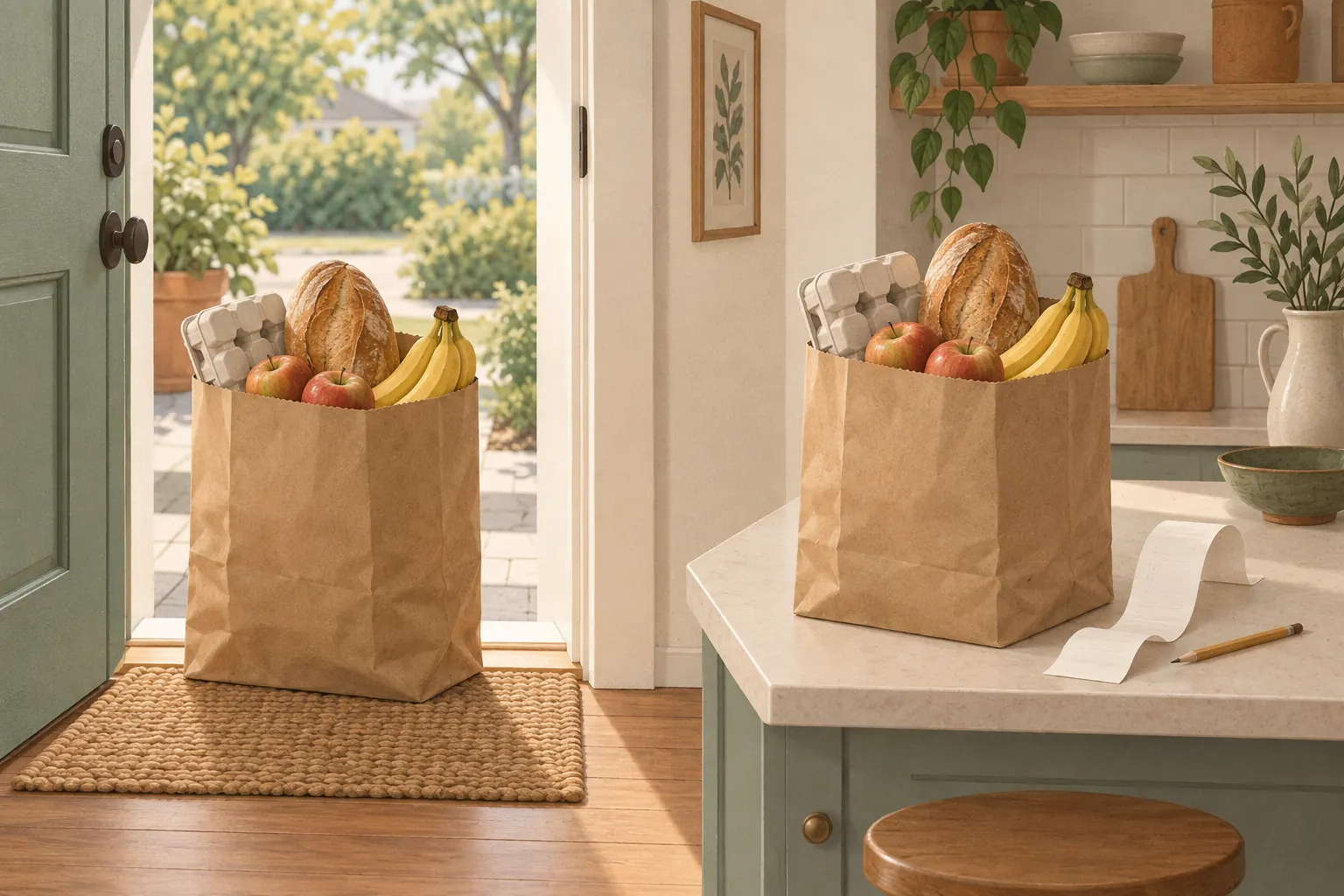
Is Instacart more expensive than in store? Retailer markups, each Instacart fee as listed in 2026, a worked $80 basket and a receipt check you can do.
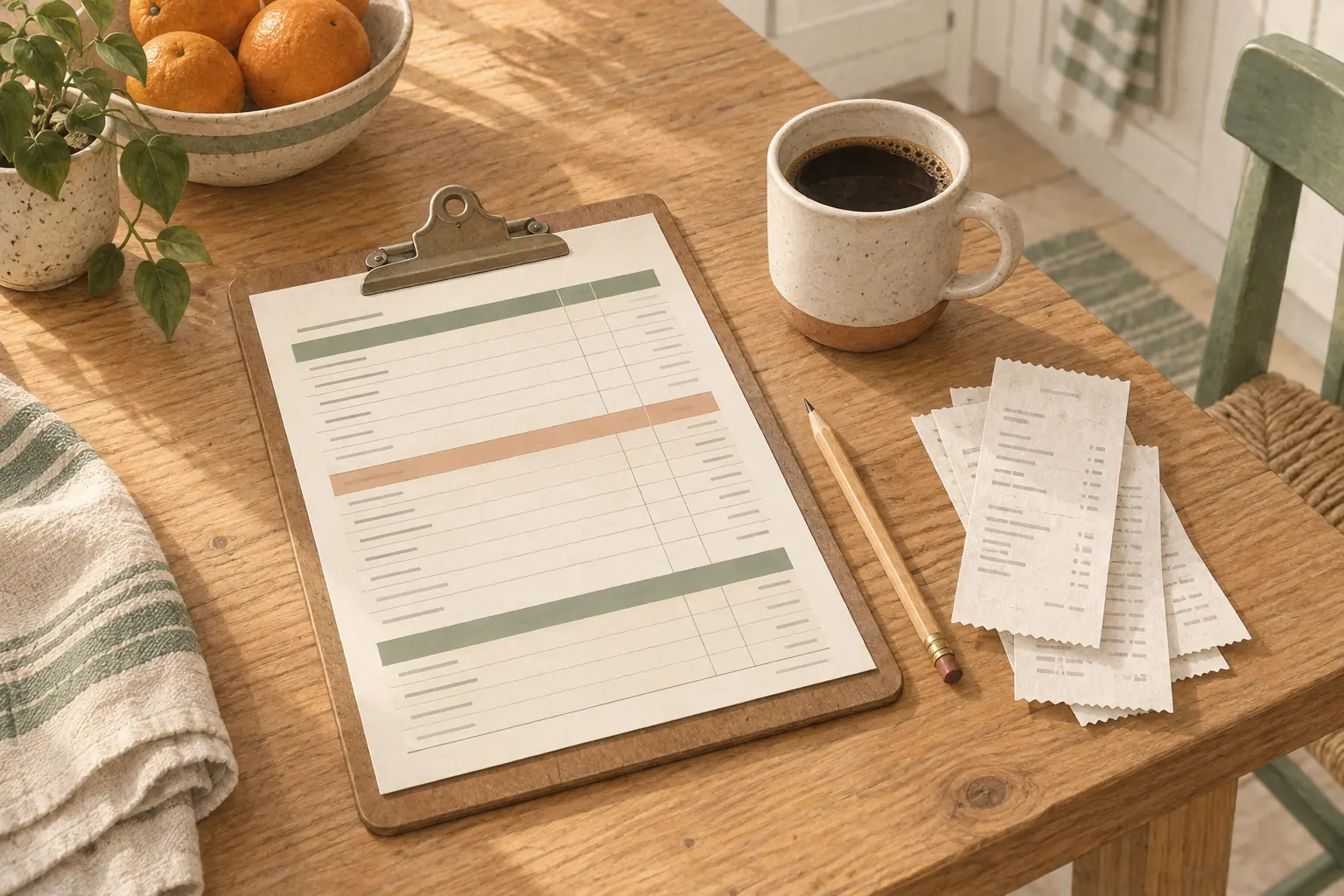
A free grocery budget template: a one-page monthly sheet (PDF, Letter and A4) and a CSV for Google Sheets or Excel, with formulas and USDA budget figures.
Is a Costco membership worth it? The 2026 fees, the spend you need to break even after waste, when Executive pays, and how Sam's Club and BJ's compare.

Grocery prices in 2026: the BLS 12-month change by aisle, average prices of 14 staples in August 2026 vs a year ago, and USDA's 2026 and 2027 forecast.

A grocery budget for one person from USDA's July 2026 food plans, with the 20% single-person adjustment: $305 to $585 a month by age and sex, per week.
A grocery budget for a family of 4 from USDA's July 2026 food plans: $1,025 to $1,683 a month, with toddler and teen versions, per meal cost and SNAP.
A free printable grocery price book, plus how to fill it from your receipts, work out unit prices and tell whether a sale price is actually a good one.
How to save money on groceries, in order of what moves the bill: measure first, cook more, waste less, then unit prices, a price book and bulk done right.
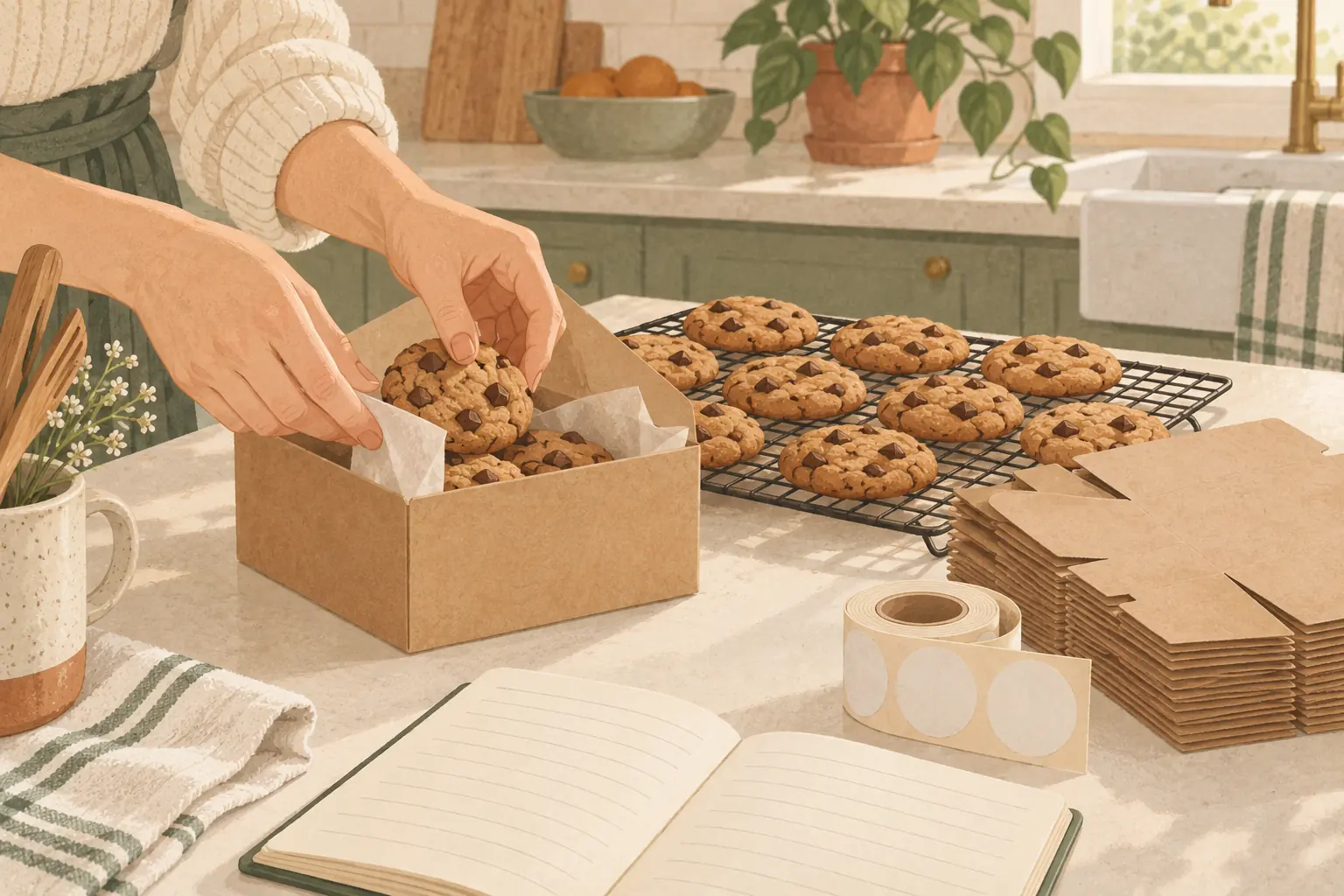
How to price homemade food: ingredients from pack prices, packaging, your time at a baker's wage, overhead and a margin, with a worked cookie example.
A grocery budget for 2 people from USDA's July 2026 food plans: $630 to $1,009 a month for a couple, with the working, age bands and how to split it.
What a home-cooked meal costs in 2026 from USDA's July food plans, against eating out, with the time, waste and double-pay nights most comparisons skip.
Buying in bulk saves money only when the discount beats what you throw away. The break-even table, a worked example and how to find your own waste rate.
USDA July 2026 grocery costs for 1 to 5 people on all four food plans, the household-size math, a worked example, and how to set your own grocery budget.
How to track grocery spending with card categories, cash, a receipt spreadsheet or an app, plus a worked example splitting one mixed supercenter receipt.
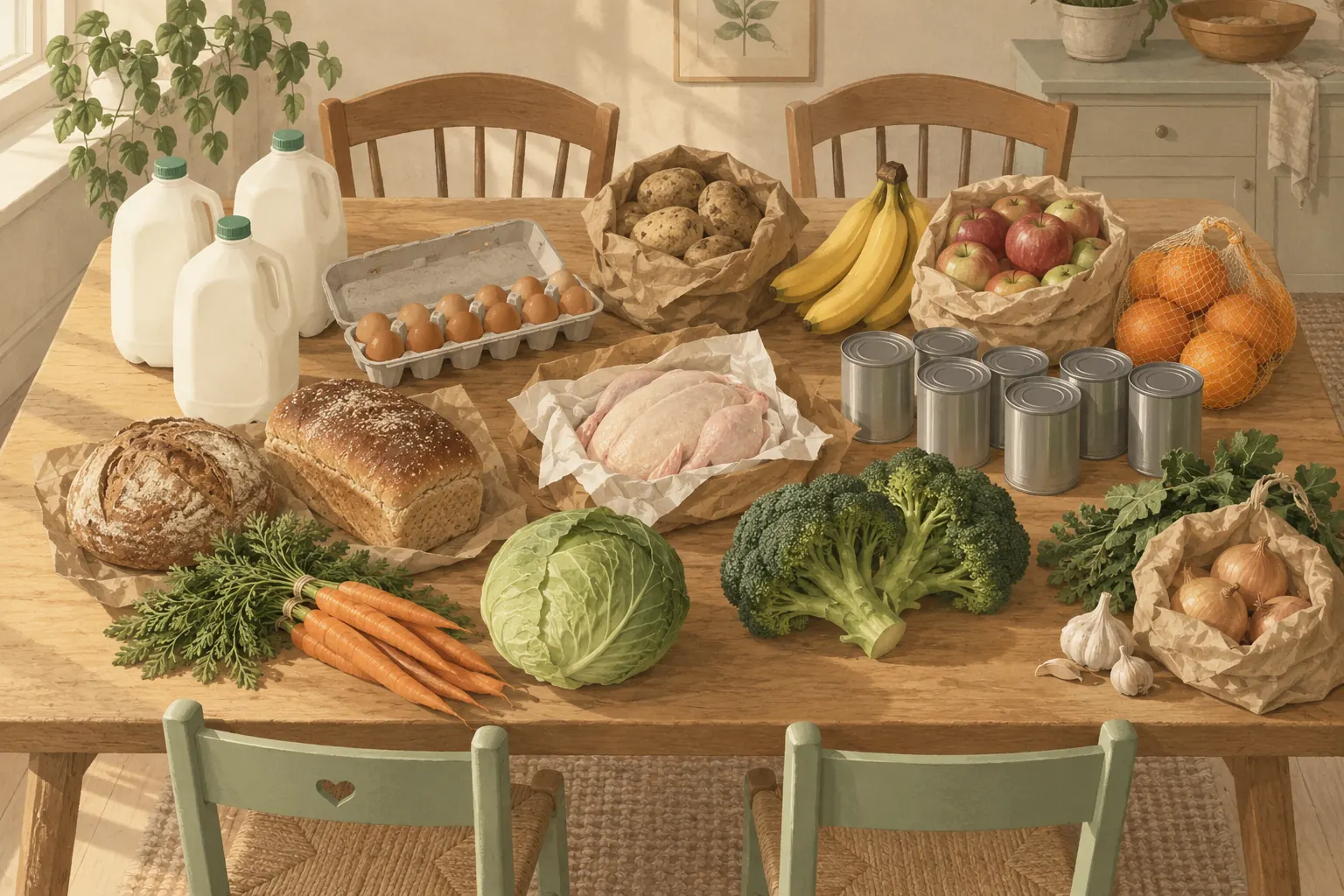
A weekly grocery list for a family of 4 built from USDA's Thrifty Food Plan: 141 lb of food, 4.9 gallons of milk, 17 eggs, and how to adjust it by age.
How to plan grocery shopping for a week in 7 steps: check what you have, plan meals, list by aisle with USDA quantities, price it, shop once, put away.
Try a 7-day pantry challenge with a free printable worksheet. Plan meals from your stock, list shopping gaps and review what remains at the end.
Pantry moths arrive in food you bought. The University of Minnesota Extension method for clearing them, plus why bay leaves and insecticides fail.
How to organize a pantry in four steps: clear it out, clean, put it back in zones by how you cook, and first in first out. Small, deep pantries and pests.
A first apartment grocery list in four stages, from the day-one shop to a pantry built over a month, with the non-food basics and a USDA budget for one.
How to meal plan from your pantry in five steps: a quick inventory, a use-first list, meals built around it and a gaps-only shopping list, with an example.
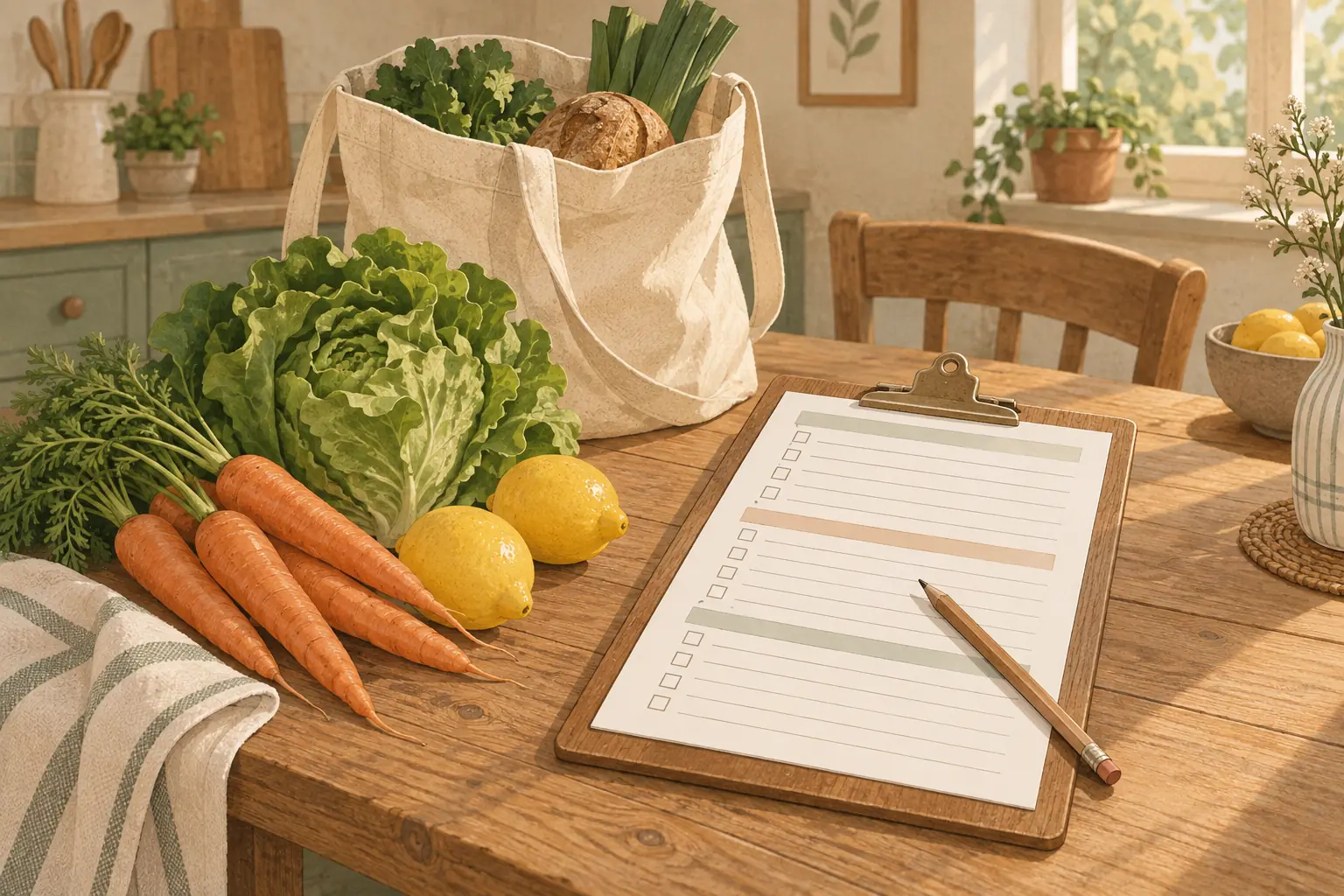
A free printable grocery list by category in store order, from produce to frozen. One page in US Letter or A4, plus a CSV for Sheets. No signup needed.
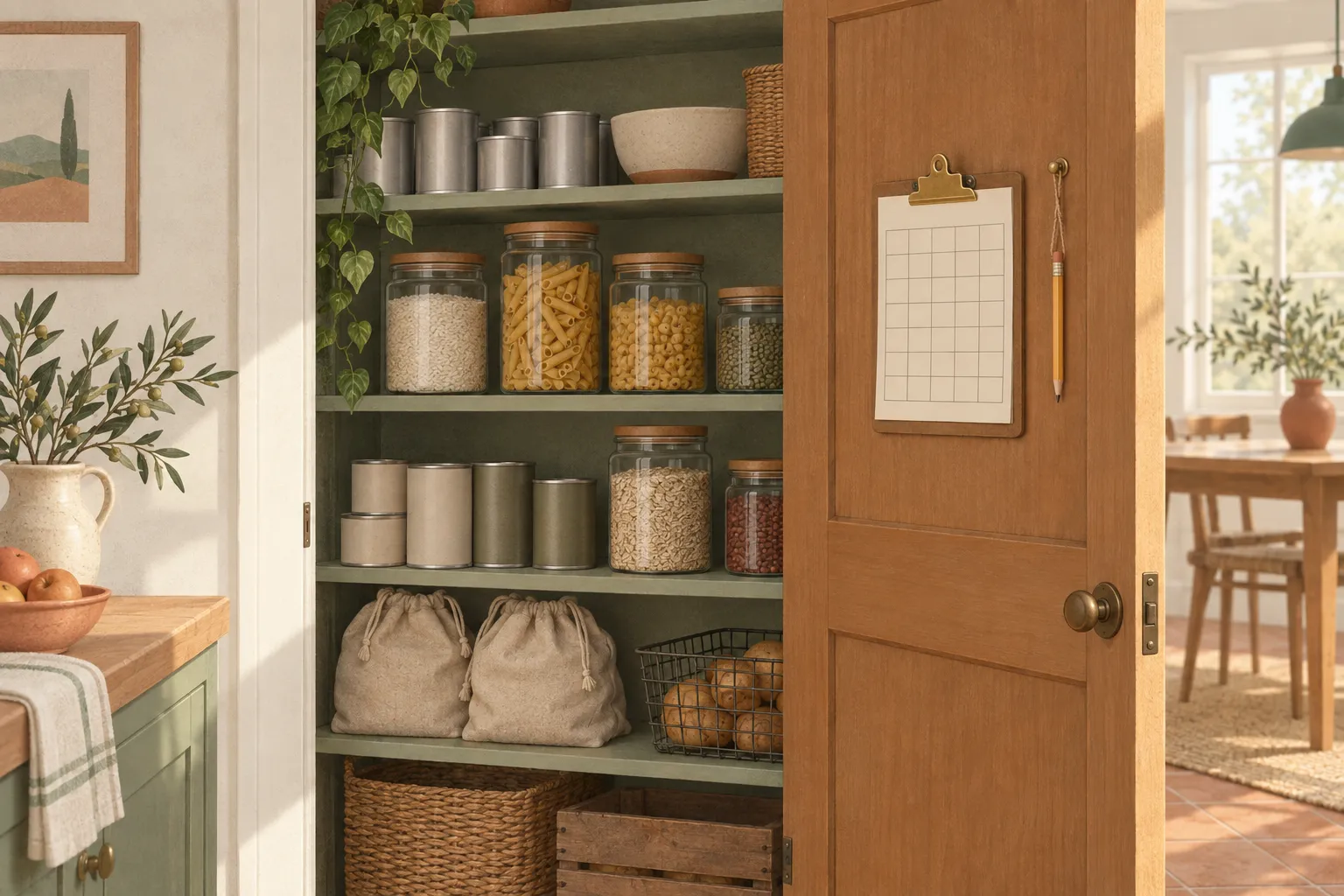
Free pantry inventory list: an Excel workbook with restock formulas, printable PDFs and a CSV, plus practical steps to keep your food inventory current.
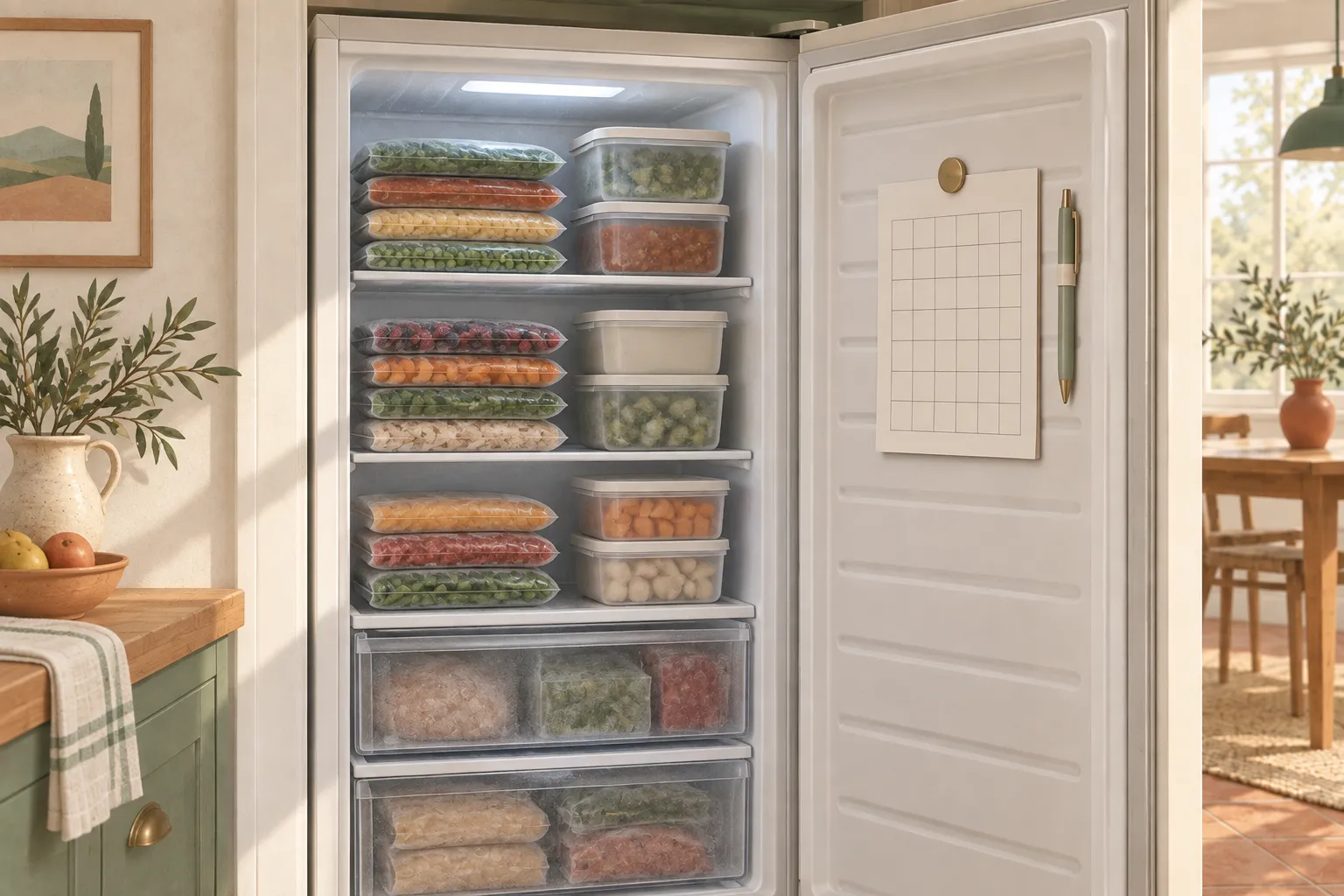
Free freezer inventory sheet for Letter or A4, plus a CSV, with a labeling and zone system that holds up and USDA freezer quality times by food.
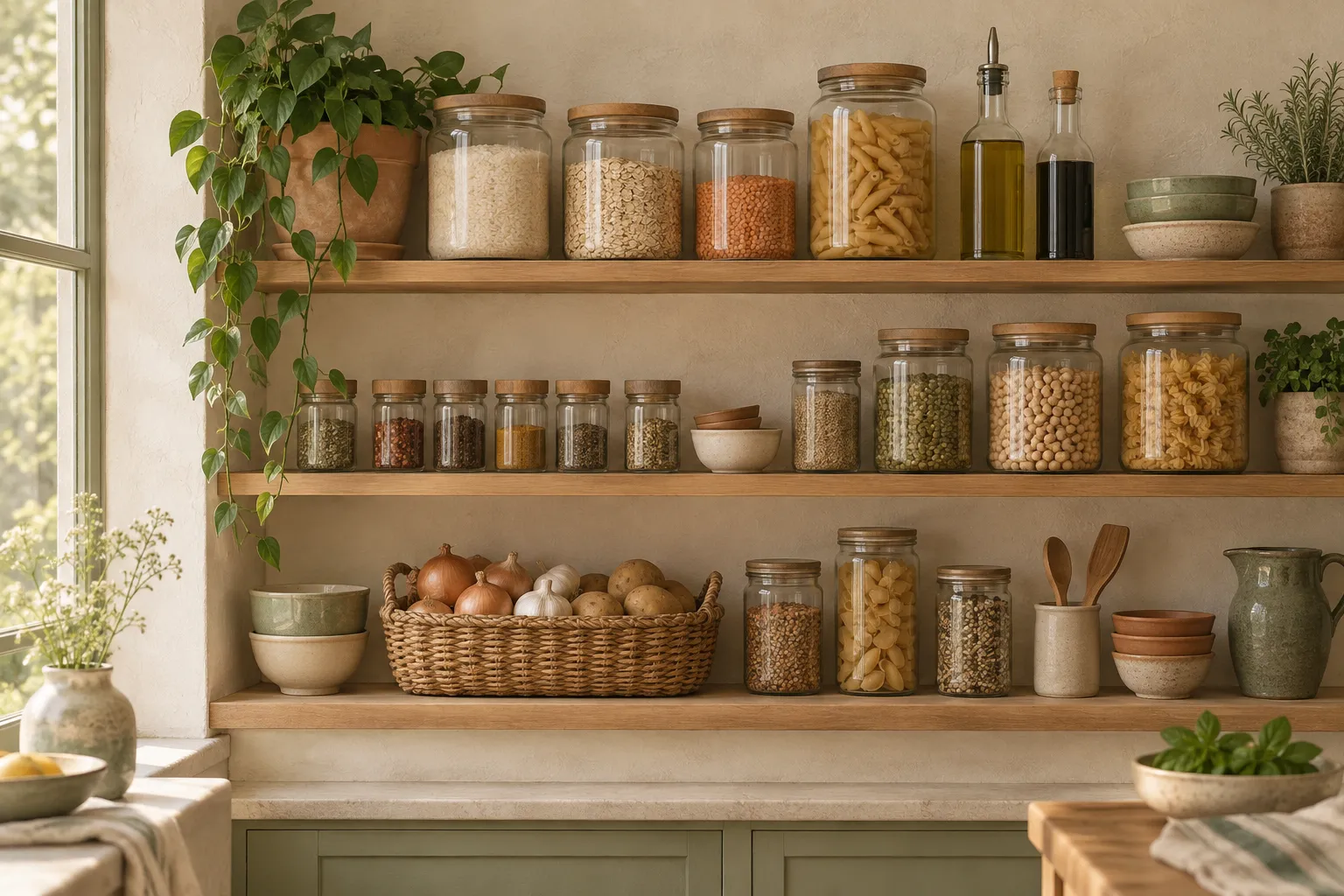
A pantry staples list of 57 items by category, with a free printable checklist, a first-apartment starter set, budget picks and how long staples keep.
Set up a shared grocery list in Apple Reminders, Google Keep or Alexa, compare apps for iPhone and Android, fix sync problems and agree on house rules.
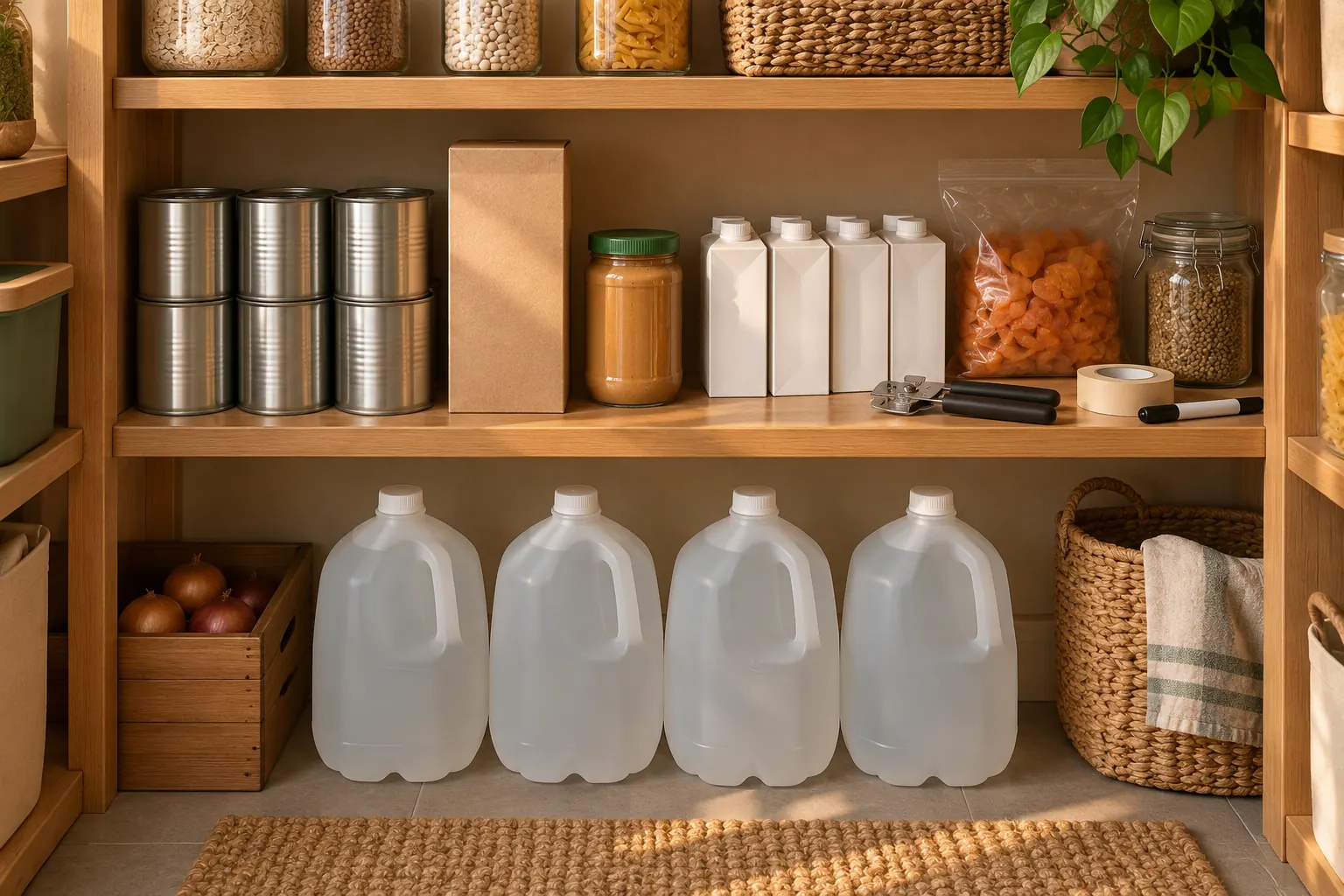
An emergency food supply list from Red Cross, Ready.gov and FEMA guidance: no-cook foods, water per person, 3-day and 2-week tables, and how to rotate it.
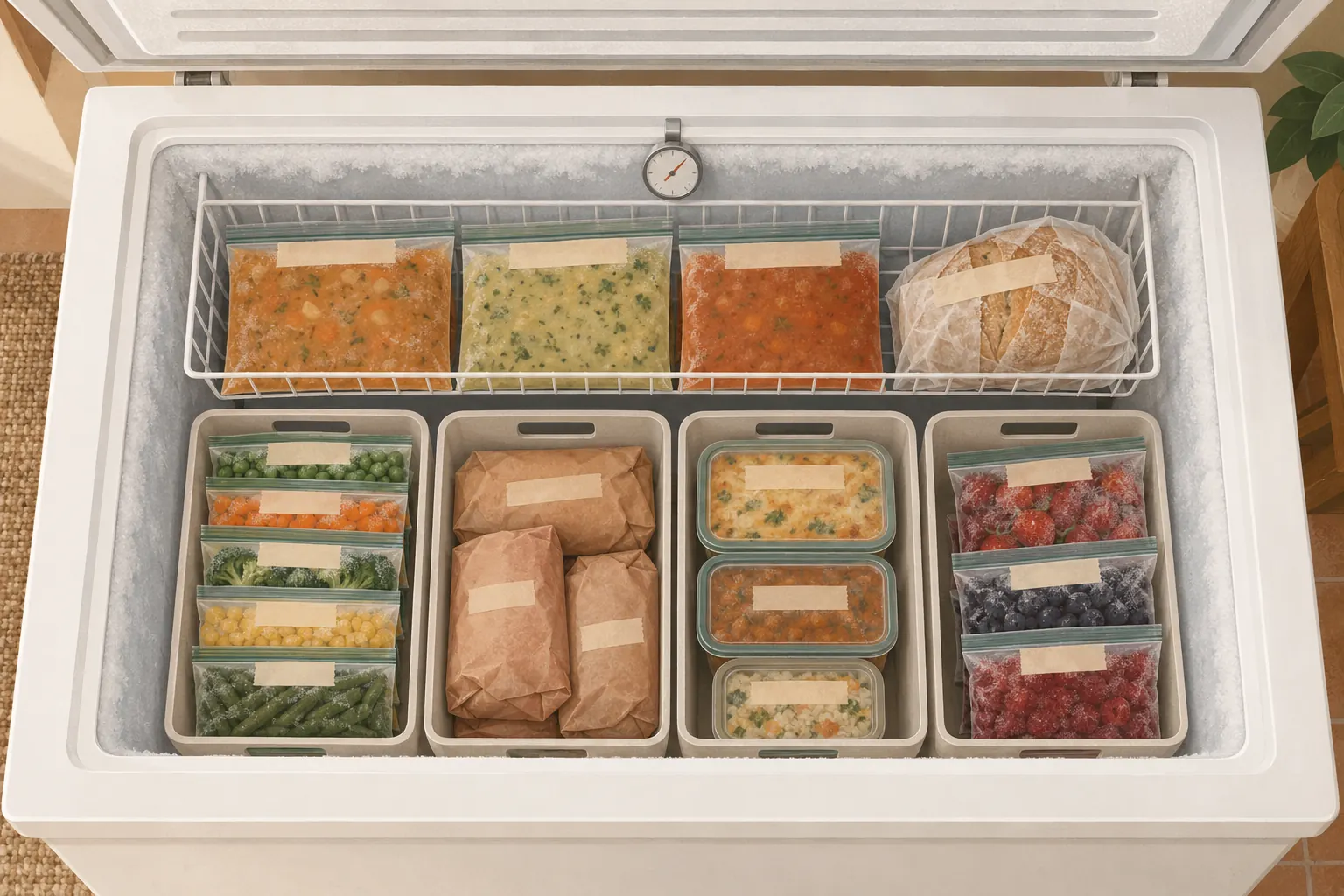
How to organize a freezer: zones for chest, upright, drawer, side-by-side and top freezers, plus labels, 0°F, how full to fill it and a monthly check.
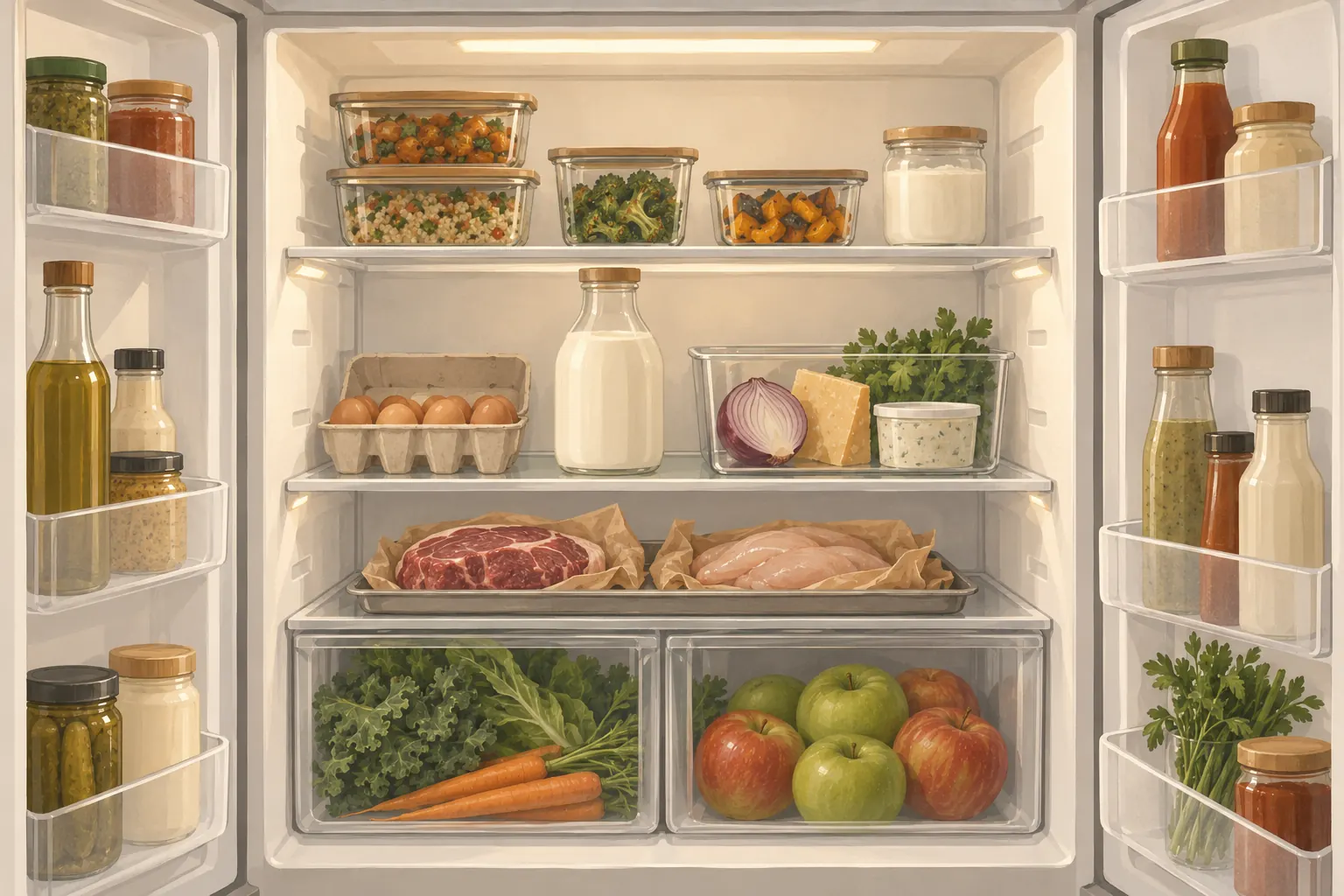
How to organize your fridge shelf by shelf: raw meat on the bottom, eggs off the door, drawers, an eat-first bin and 7 steps to cut food waste.
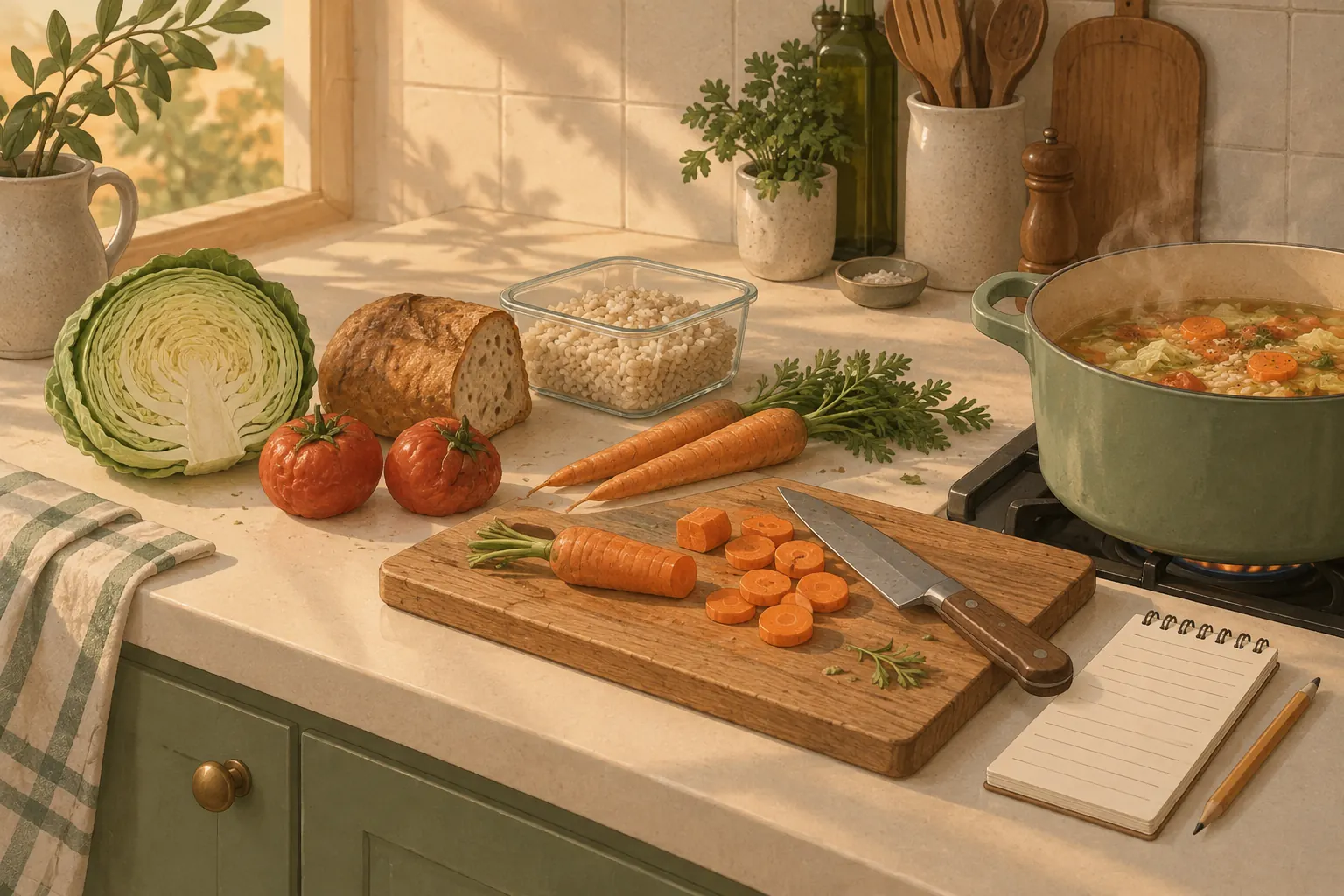
How to reduce food waste at home by fixing the two real causes, forgotten food and oversized portions, with a ranked habit table and tips for living alone.
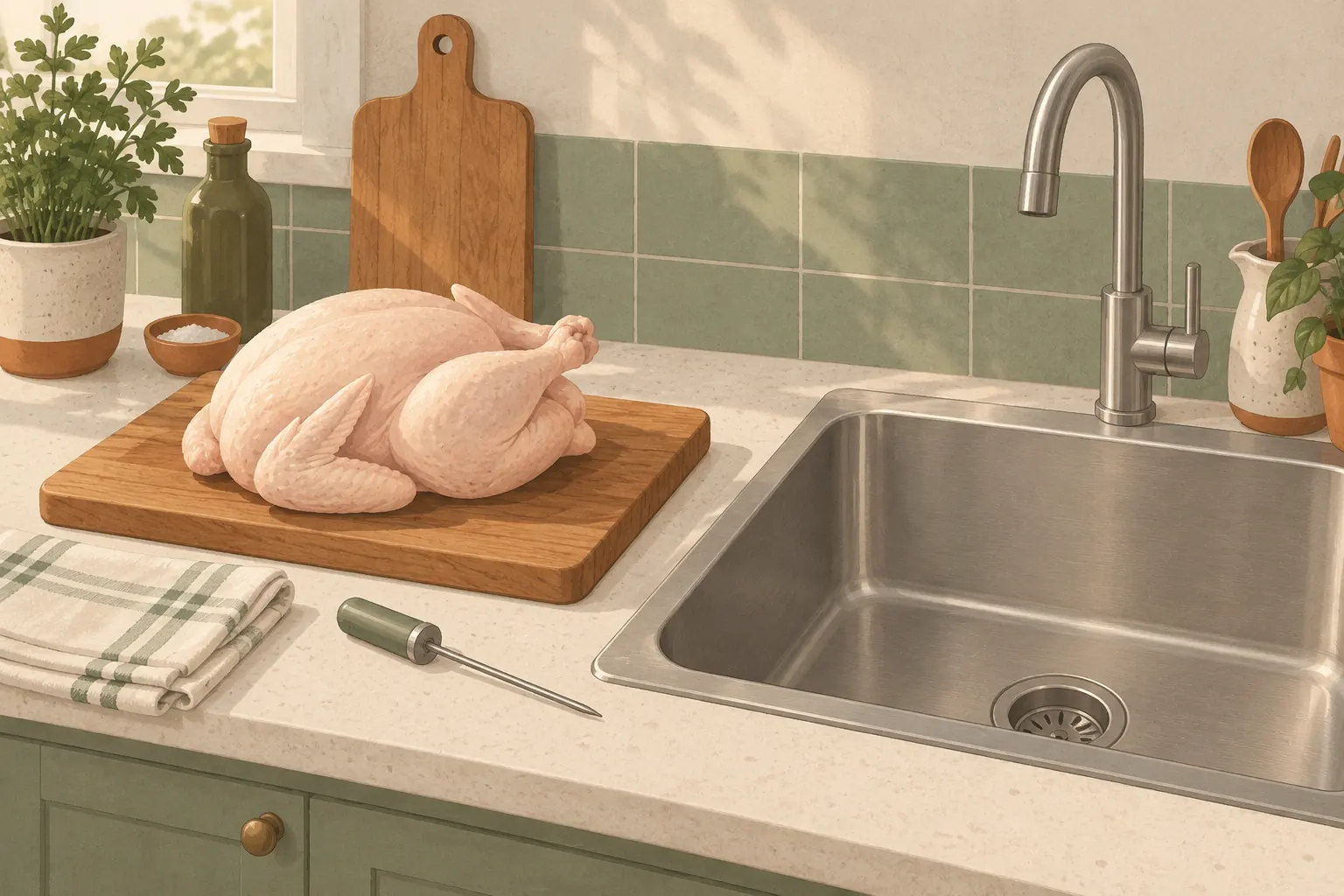
USDA does not recommend rinsing raw poultry: the splash spreads bacteria, and cooking to 165F kills them anyway. What to wash, what not to, and why.
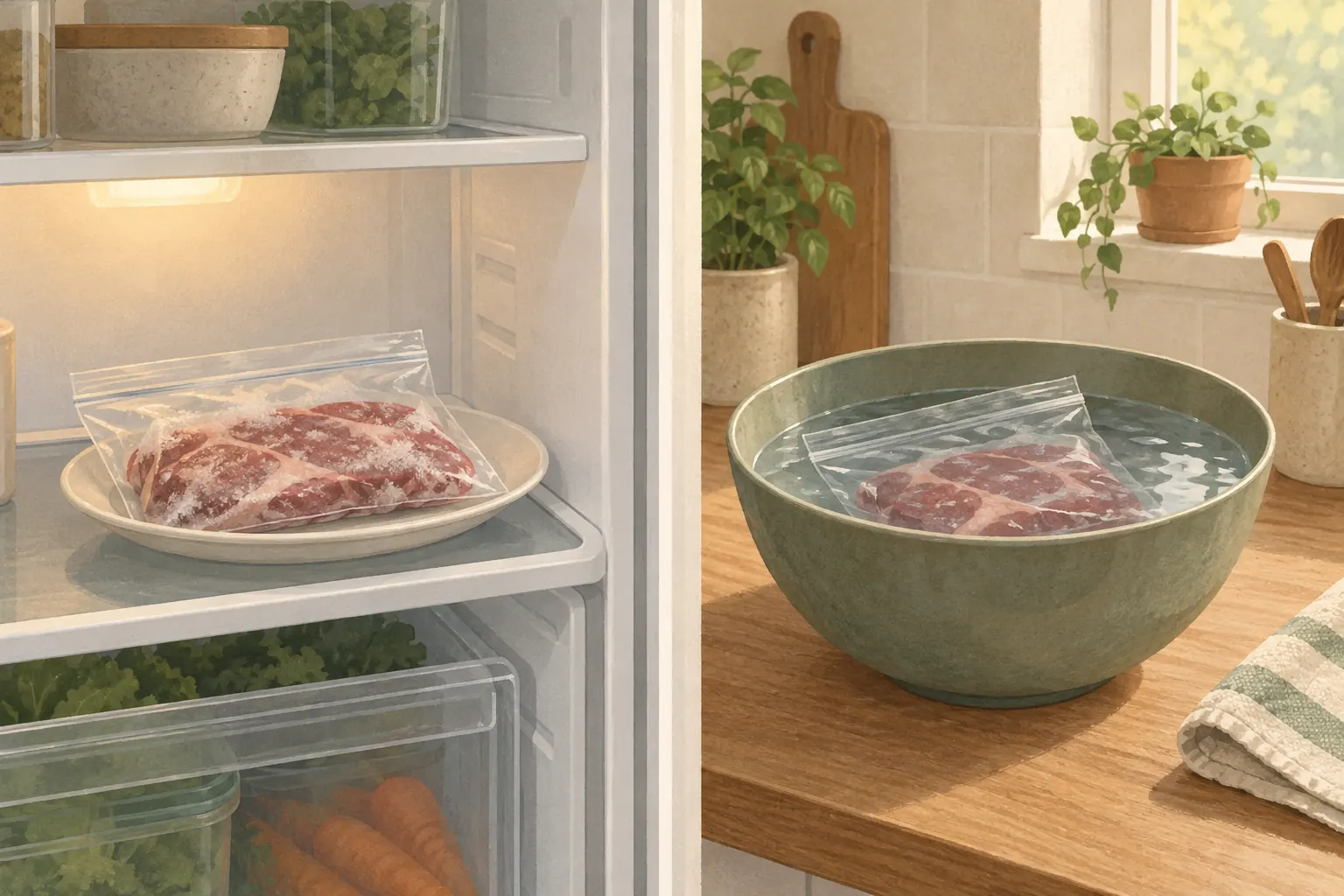
The refrigerator, cold water and the microwave — with USDA timings, why the counter is out, and which methods let you refreeze without cooking first.
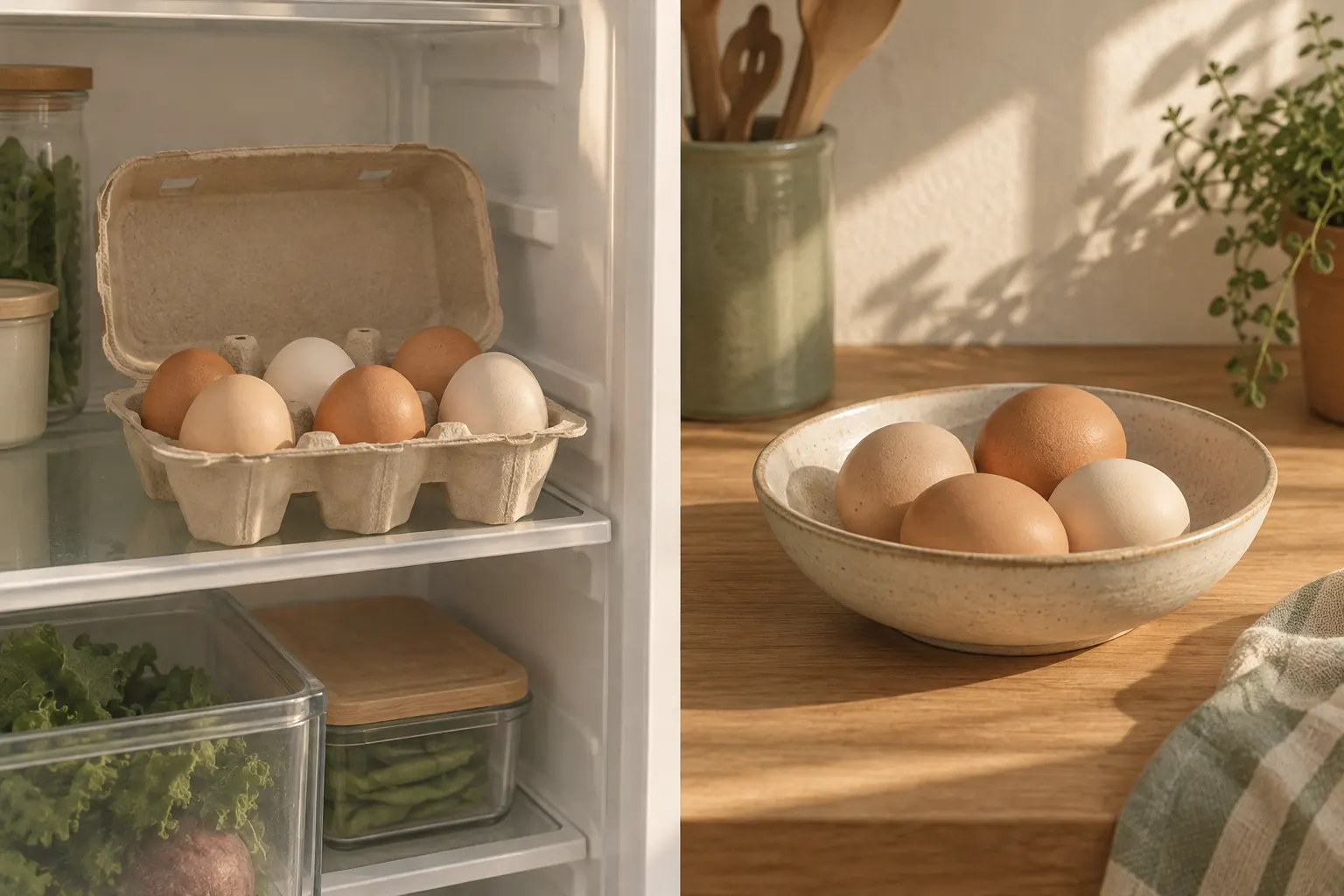
US eggs are washed, so they need the fridge; European eggs keep their cuticle and keep on the counter. USDA on both systems, and how long eggs last.
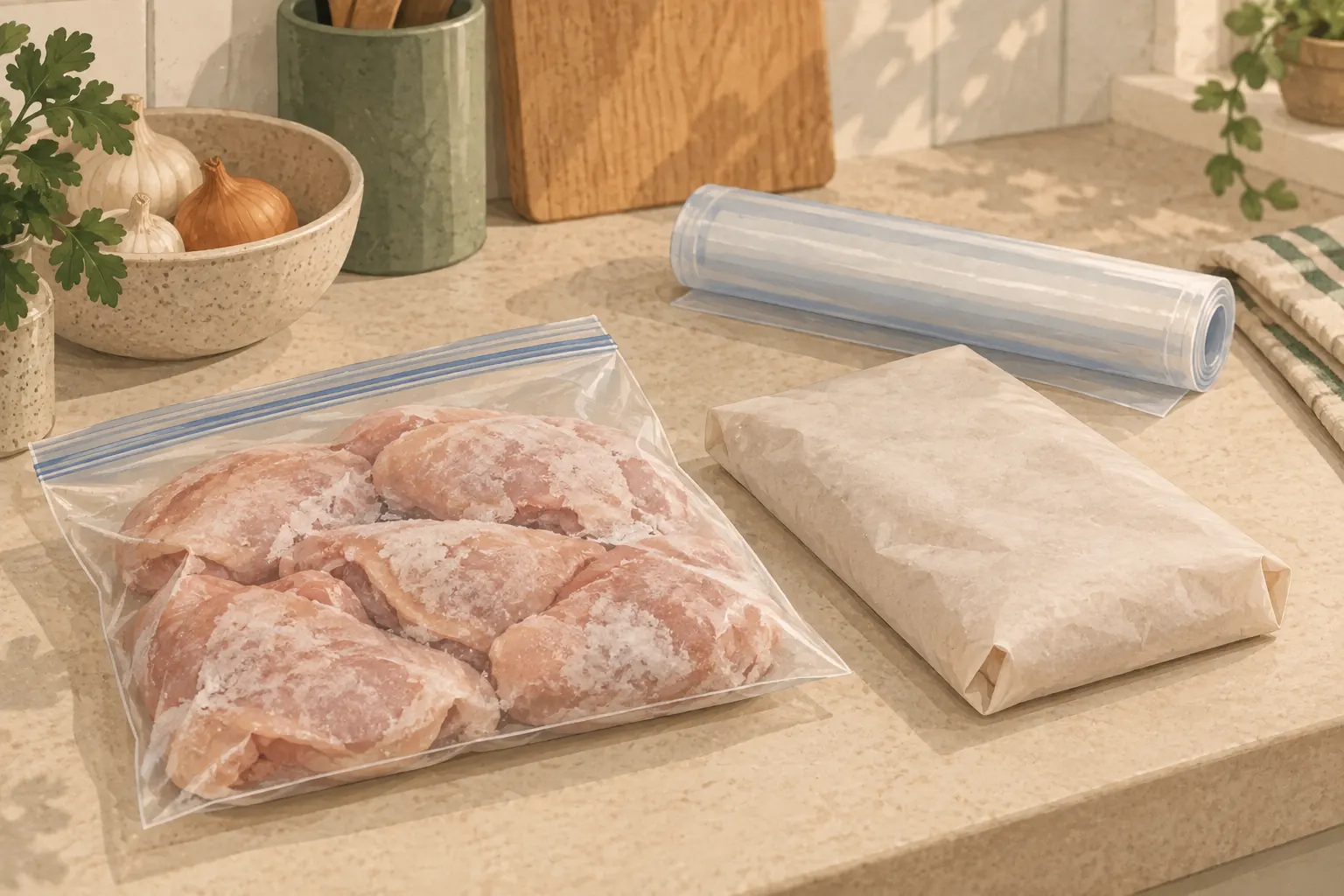
Freezer burn is the gray-brown dry patch air leaves on frozen food. What USDA says about it, how to cut it out, and the packing habits that prevent it.
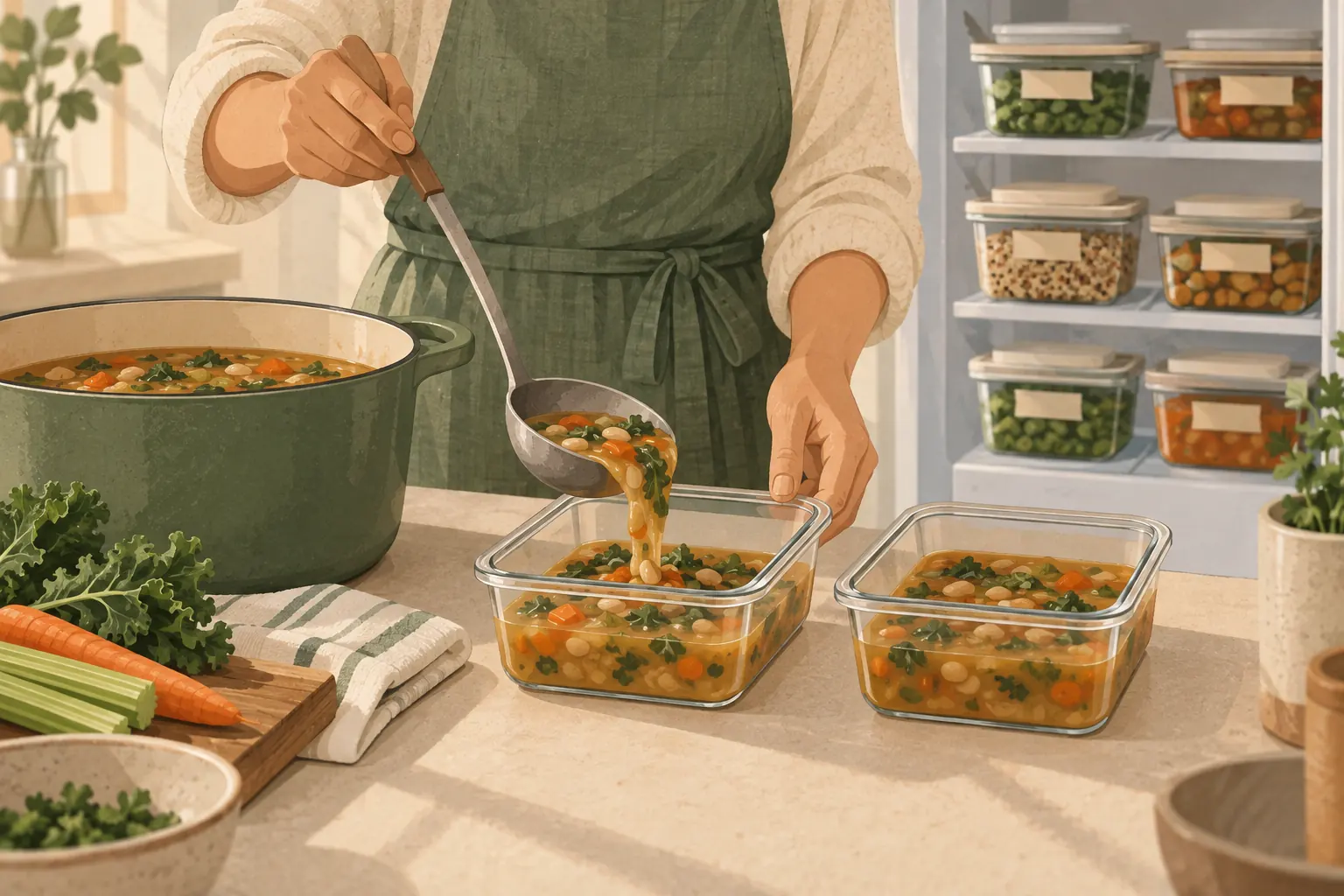
USDA gives leftovers 3 to 4 days in the fridge, 3 to 4 months in the freezer. When the clock starts, how to cool them fast, what reheating cannot fix.
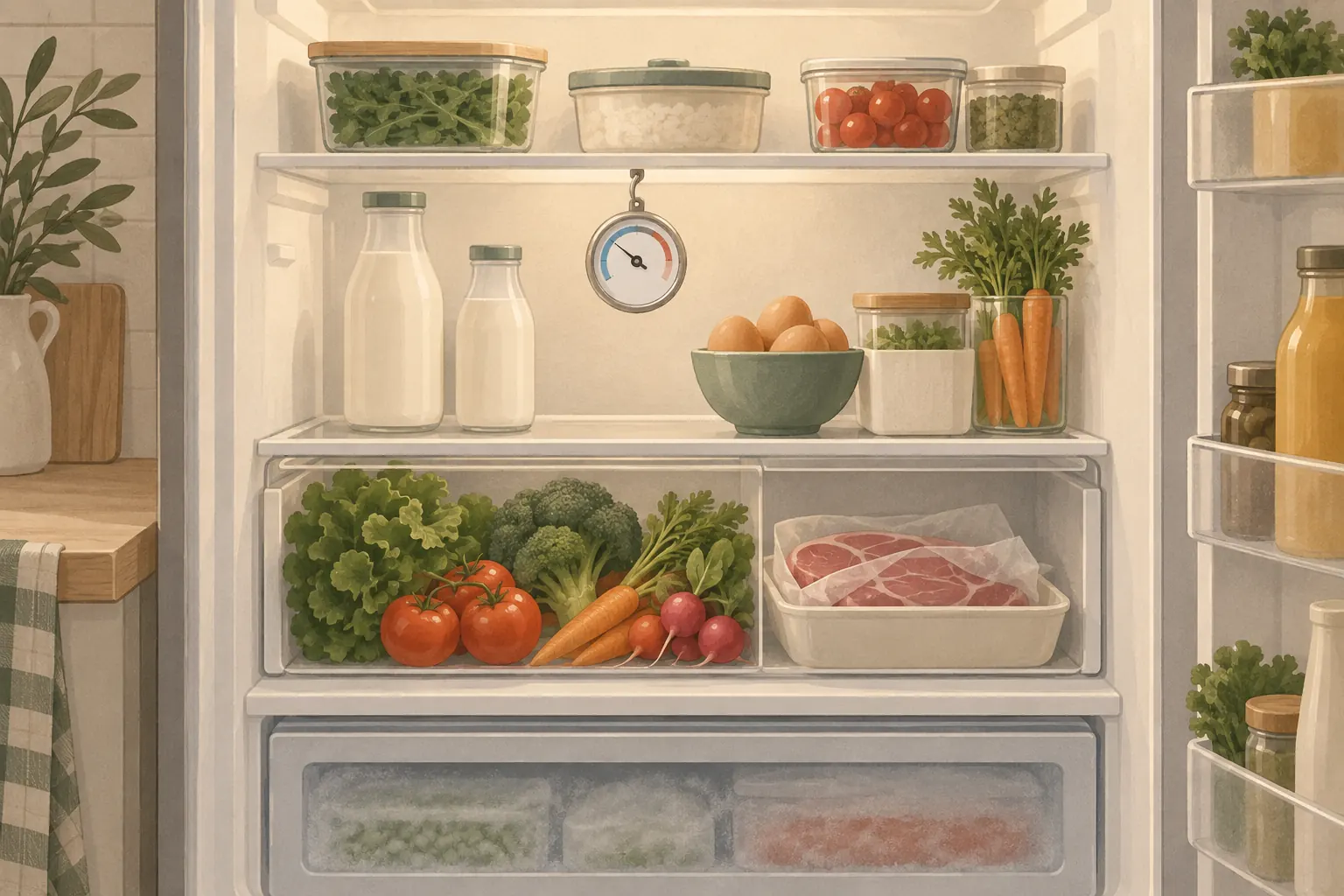
A fridge belongs at 40F (4C) or below and a freezer at 0F (-18C). Why those numbers, how to measure with an appliance thermometer, and what the dial means.
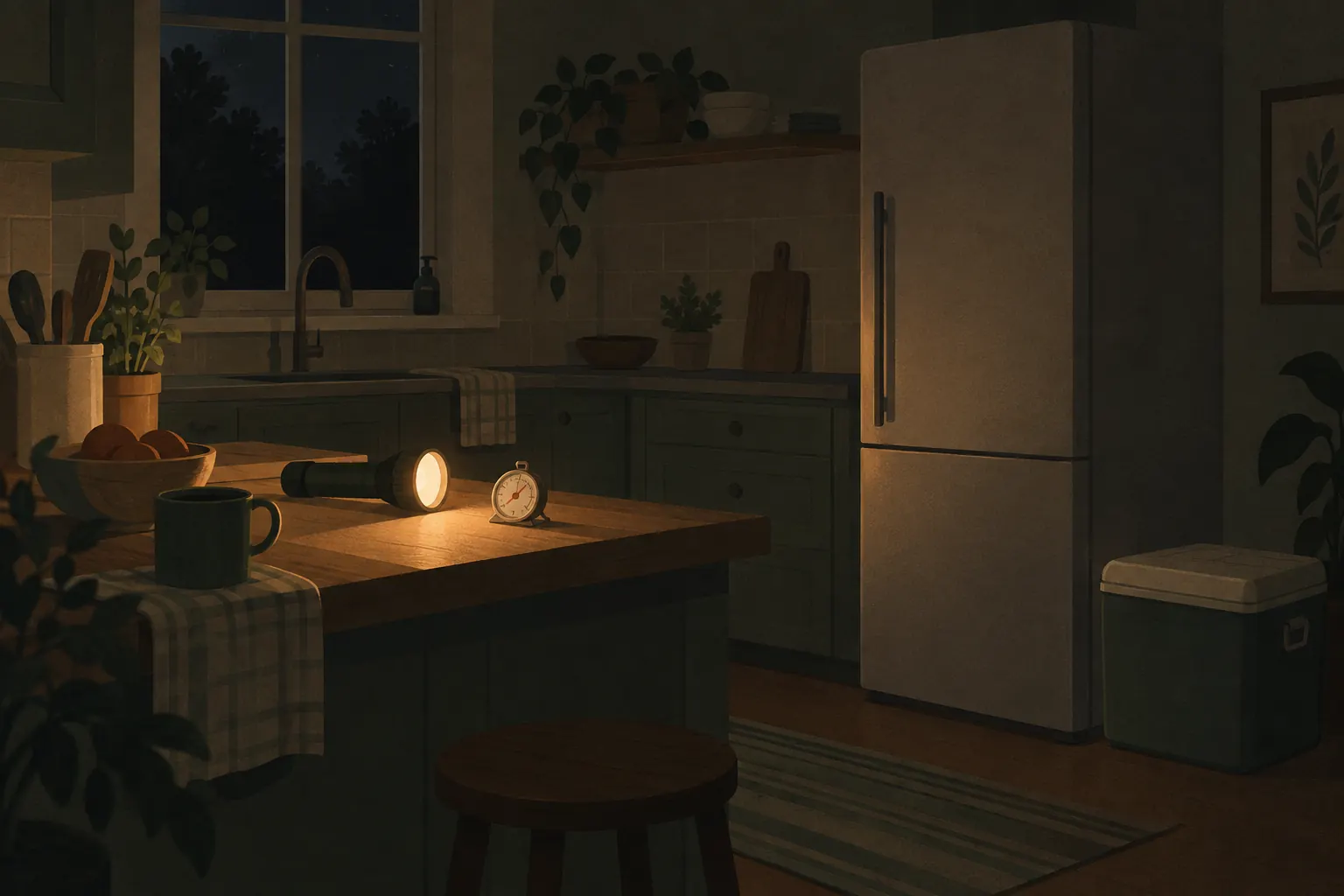
A fridge keeps food cold about 4 hours, a full freezer 48. What to keep and what to discard after that, from the federal power outage chart, food by food.
USDA gives perishable food two hours at room temperature, one hour above 90F. What the clock covers, why it is cumulative, and how to cool leftovers fast.
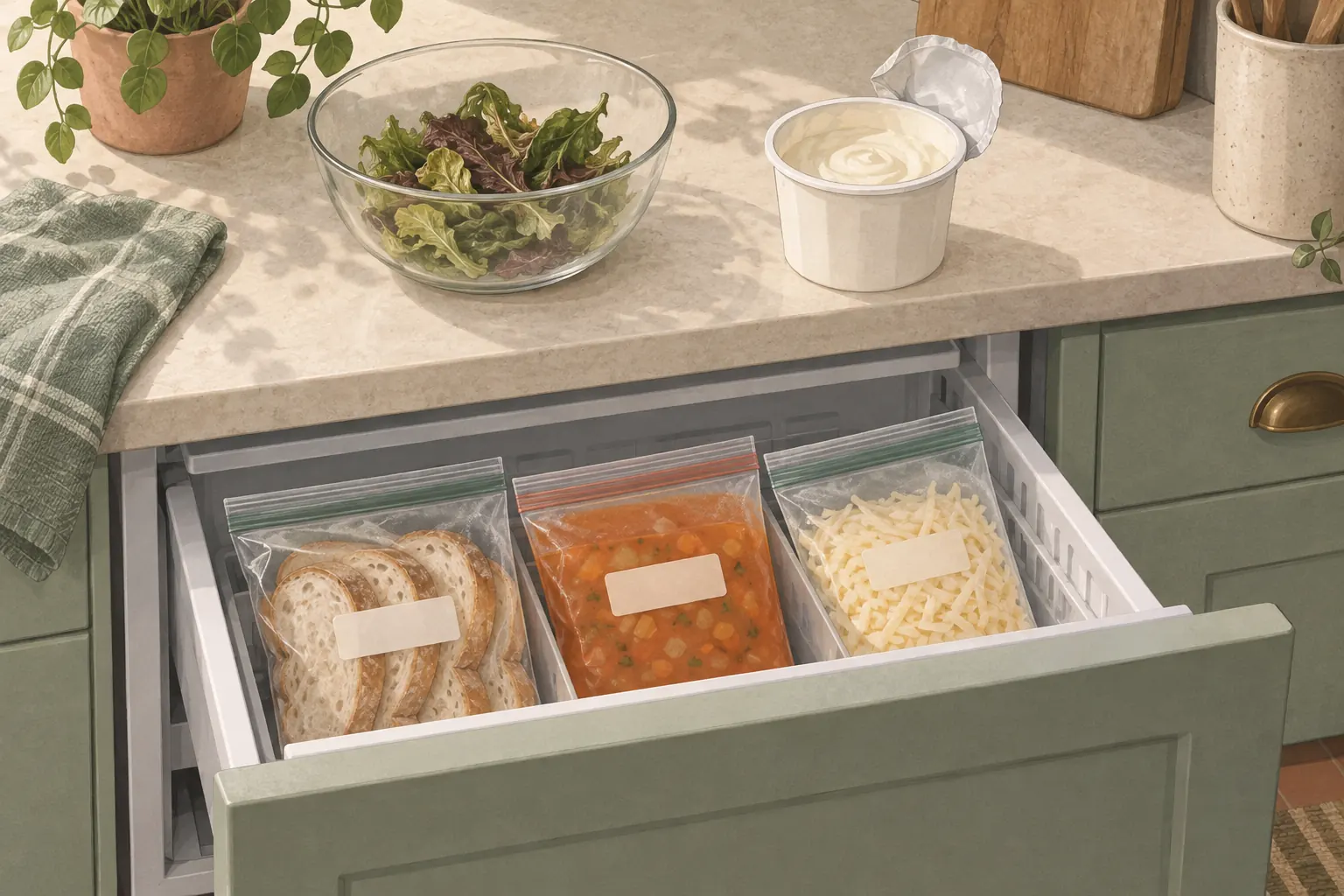
What freezes well and what comes back limp, watery or mushy: the USDA-backed list of foods that don't freeze, plus how long the freezer keeps the rest.
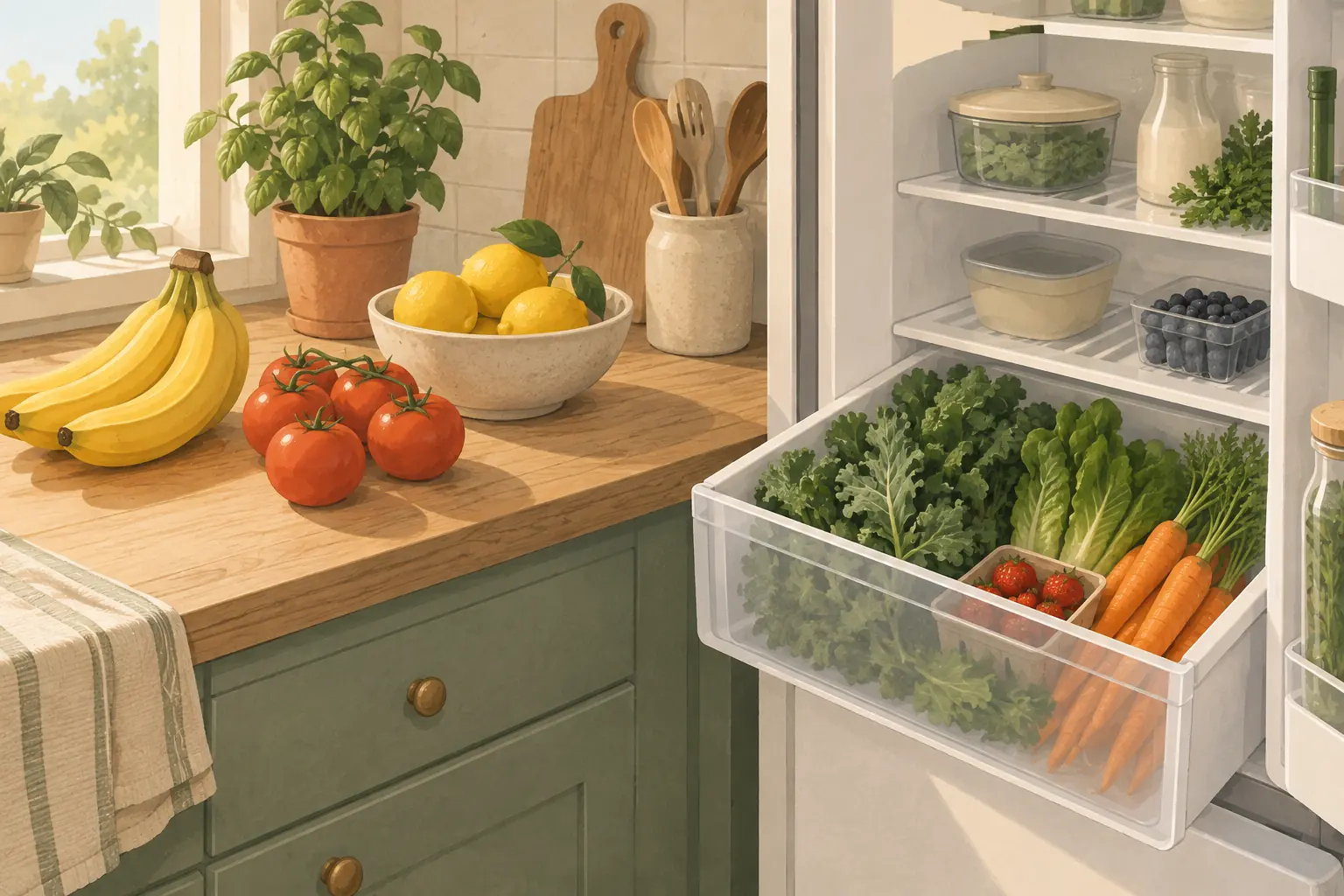
How to store produce so it lasts longer: UC Davis's chart of which fruits and vegetables go in the fridge, on the counter or in the pantry, and why.
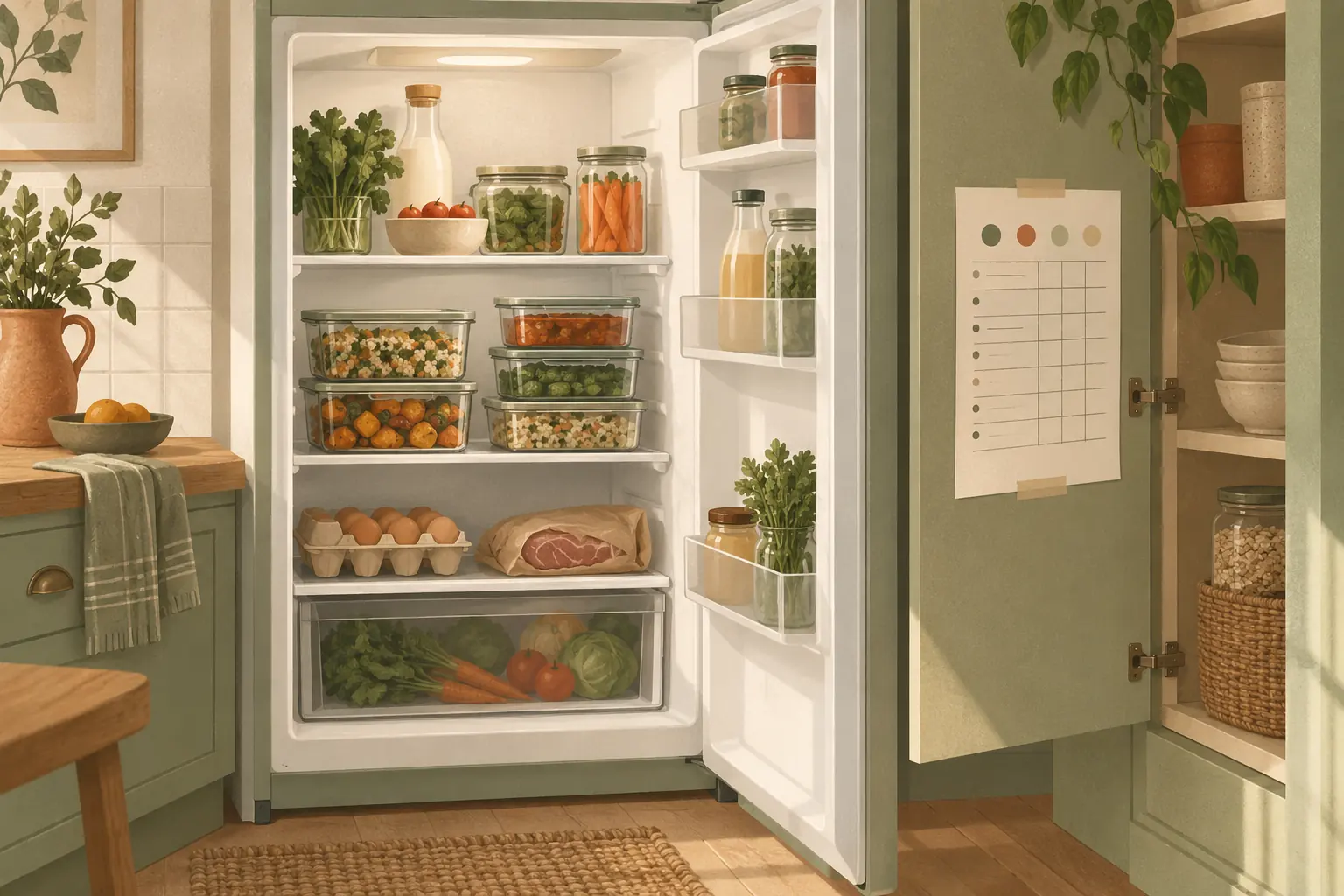
How long food lasts in the fridge and freezer, from the FoodSafety.gov chart: leftovers, meat, chicken, fish, eggs, power outages, plus a printable.
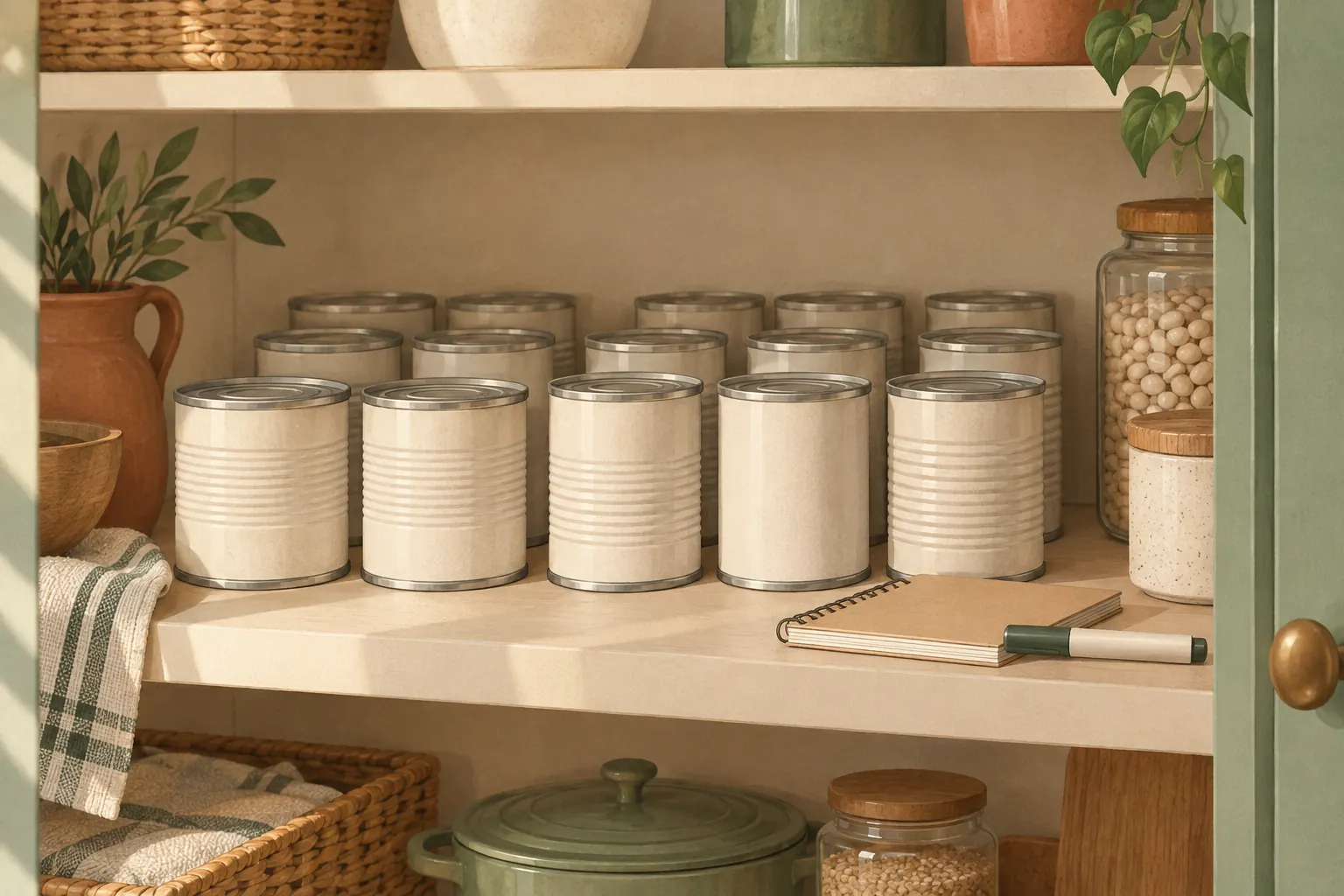
Canned food shelf life from USDA FSIS: 12 to 18 months for high-acid cans, 2 to 5 years for low-acid, after opening, and what the date on a can means.
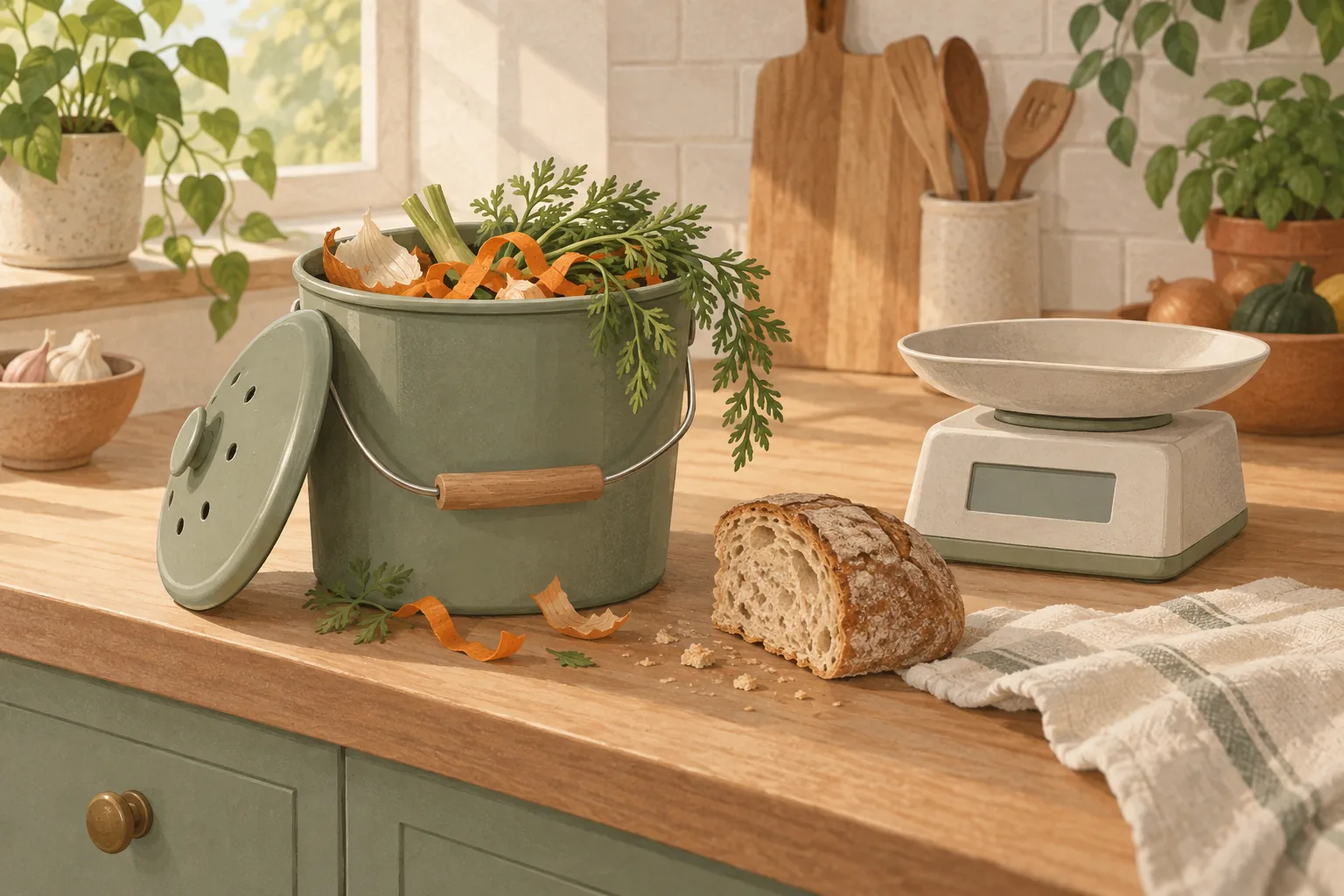
Food waste statistics for 2026 with the data year and source for every figure: EPA, ReFED, USDA, UNEP and FAO, and why the US estimates disagree.
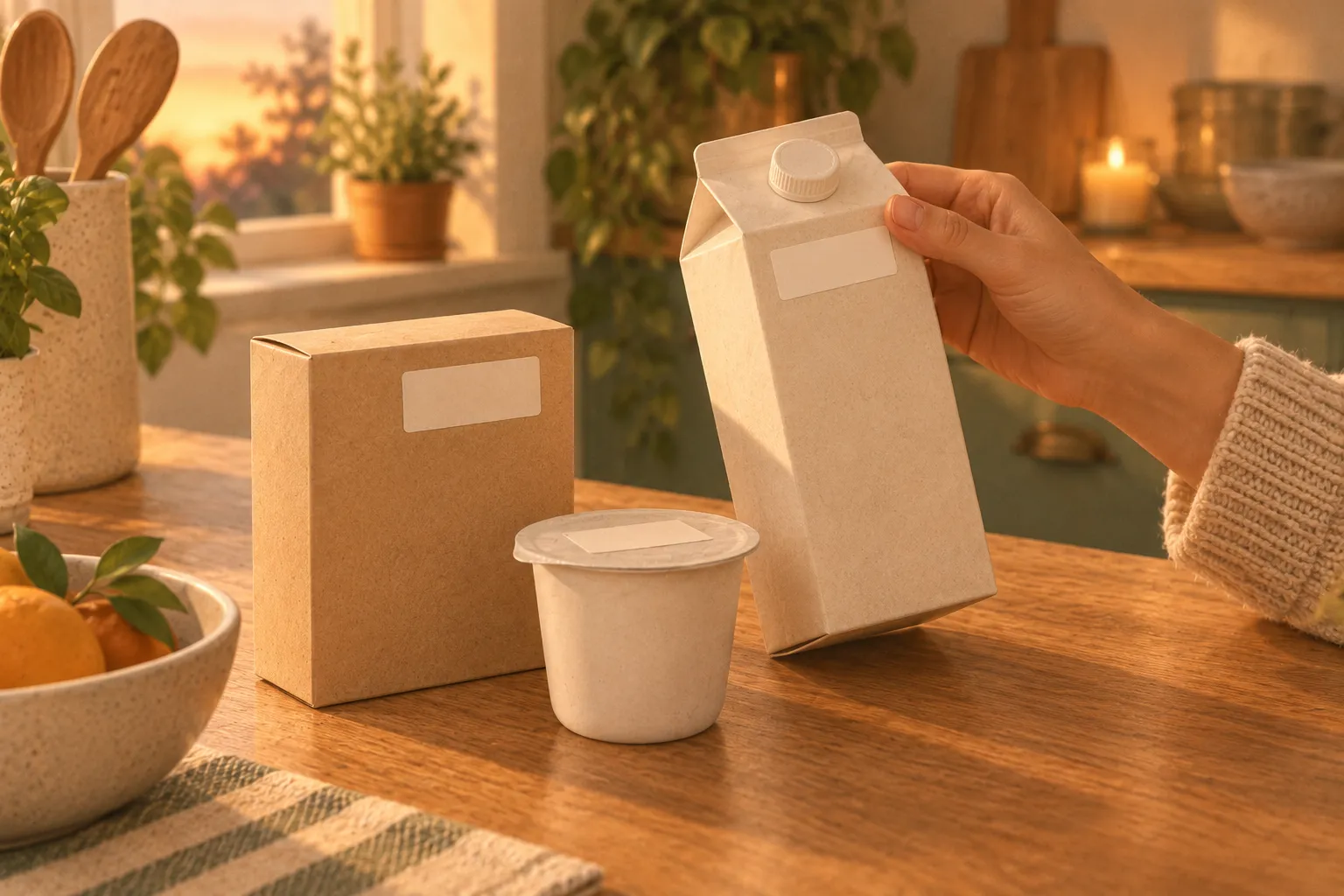
Best before vs use by vs sell by, explained for US, UK and EU labels, with a table of every food date, what the law says and what to do with each one.
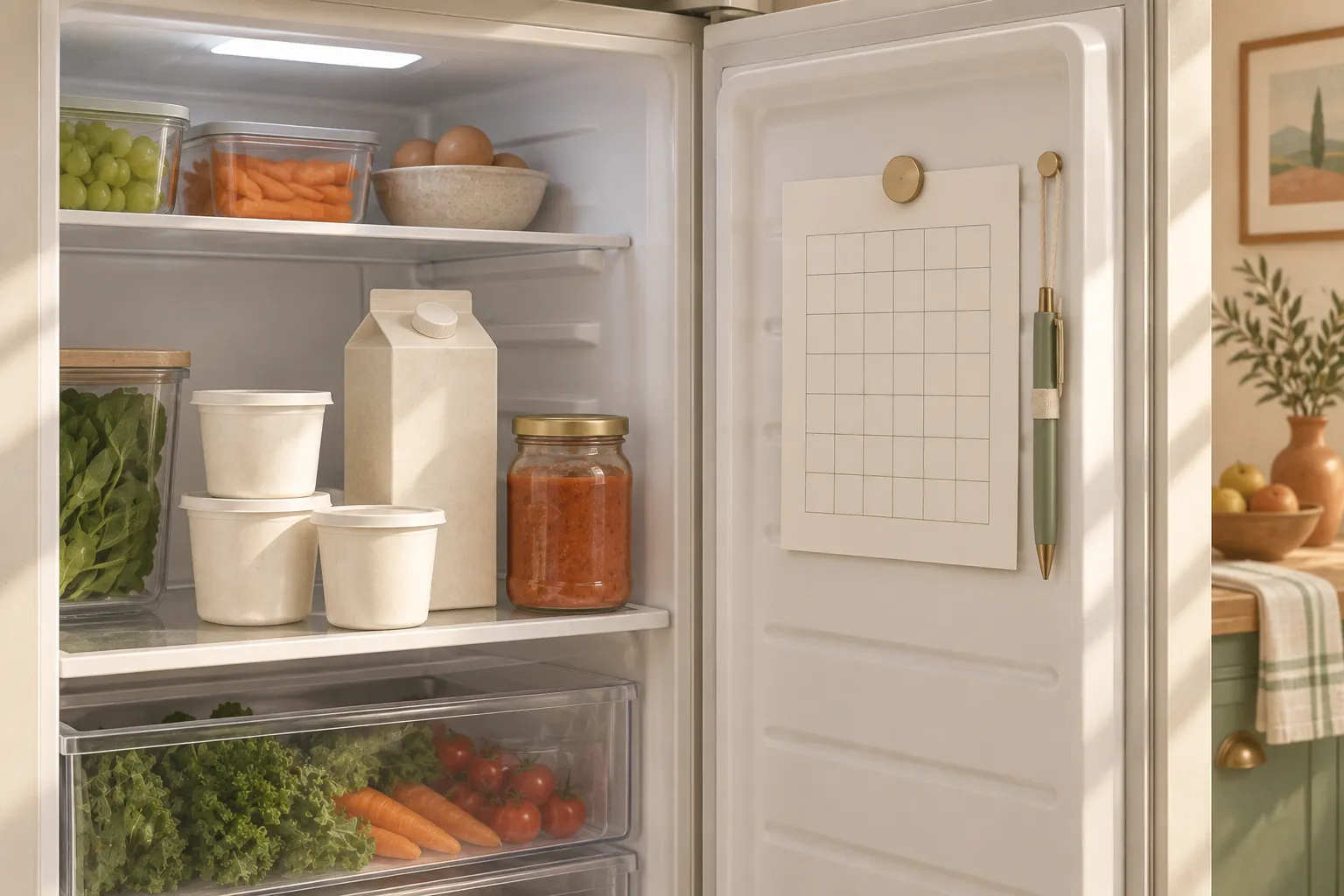
A free expiration date tracker printable (Letter and A4), a Google Sheets and Excel setup that colors dates due in 3 days, and when an app works better.
The best grocery receipt scanner apps in 2026, by job: Fetch and Ibotta for rewards, Duneed, Pantrino and NoWaste for tracking what you buy and spend.
Grocery receipt codes decoded: PLU and UPC numbers, tax letters like F, N, T and X, card and TC lines, and Walmart, Costco and UK notes on what's official.
The best pantry inventory app depends on how you add food. 9 apps compared on platforms, barcode or receipt entry, expiry alerts, sharing and real prices.