
Food in the fridge after a power outage: the 4-hour and 48-hour rules
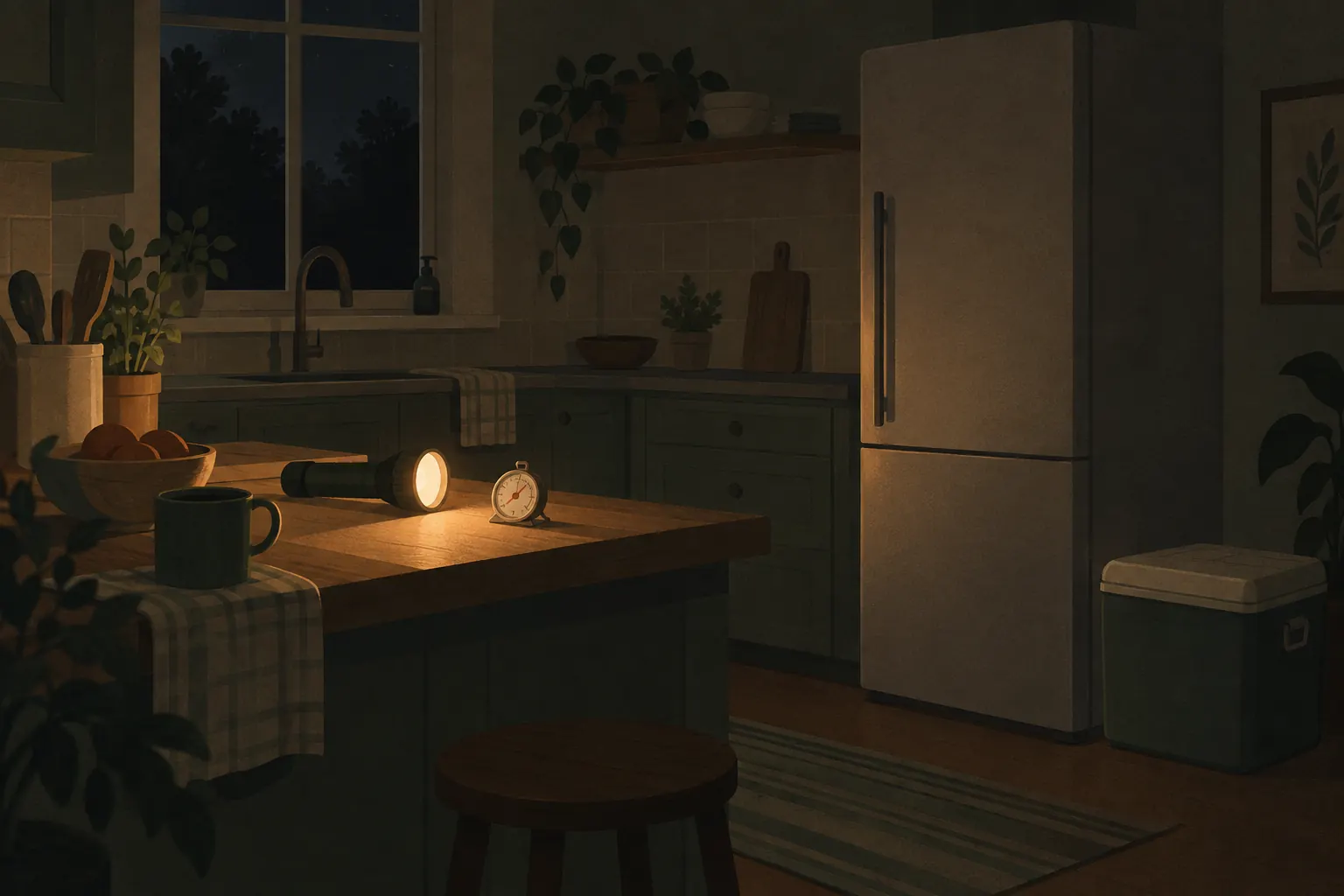
Two numbers carry most of the answer. An unopened refrigerator holds a safe temperature for about 4 hours. A full freezer holds one for about 48 hours, or 24 hours if it is half full, as long as the door stays shut. Both are USDA's, in Keeping Food Safe During an Emergency, and both assume the thing most people get wrong: that the door stays closed.
After that, the question stops being about hours and becomes a list. FoodSafety.gov publishes a chart of what to keep and what to discard once refrigerated food has been above 40°F (4°C) for more than two hours, and the answers are not intuitive. Hard cheese keeps. Shredded cheese from the same fridge does not.
The refrigerator chart, in short
From the federal Food Safety During Power Outage chart, for food held above 40°F for more than 2 hours:
| Discard | Keep |
|---|---|
| Raw or cooked meat, poultry, fish, seafood, soy meat substitutes | Hard cheeses: cheddar, Colby, Swiss, Parmesan, provolone, Romano |
| Meat, tuna, shrimp, chicken and egg salads | Processed cheeses, grated Parmesan or Romano in a can or jar |
| Gravy, stuffing, broth; casseroles, soups, stews | Butter and margarine |
| Lunchmeats, hot dogs, bacon, sausage, dried beef | Fresh fruit, uncut; opened fruit juices; opened canned fruit |
| Soft cheeses, shredded cheeses, low-fat cheeses | Dried fruit, raisins, dates, candied fruit |
| Milk, cream, sour cream, buttermilk, yogurt, eggnog, soy milk | Peanut butter, jelly, relish, mustard, catsup, olives, pickles |
| Fresh shell eggs, hard-cooked eggs, egg dishes and egg products | Worcestershire, soy, barbecue and hoisin sauces |
| Cut fresh fruit and cut fresh vegetables; pre-washed packaged greens | Uncut fresh vegetables, fresh mushrooms, herbs and spices |
| Cooked pasta, rice and potatoes; fresh pasta; potato salad | Bread, rolls, cakes, muffins, tortillas, waffles, pancakes, bagels |
| Opened mayonnaise, tartar sauce, horseradish (above 50°F for over 8 hours) | Opened vinegar-based dressings; fruit pies |
The pattern is worth learning, because it covers foods the chart does not name. Anything that is moist, low in acid and high in protein goes. Anything dry, salty, acidic or high in sugar stays.
The freezer: ice crystals decide
The freezer rule is different, and more forgiving. FoodSafety.gov's wording: "Food may be safely refrozen if it still contains ice crystals or is at 40°F (4°C) or below, however, its quality may suffer."
So the test is physical. Ice crystals in the package, or a thermometer reading of 40°F or below, and meat, poultry, fish, stews, soups, milk, eggs out of the shell and most cheese can be refrozen. Above that, the same chart says discard. Two exceptions worth knowing: ice cream and frozen yogurt are on the discard line even with ice crystals present, and hard cheese is the one food the chart lets you refreeze either way.
One line on that page deserves repeating in bold, because it is the instinct everyone has: "Never taste food to determine its safety."
Before the power goes out
Storms are forecast; outages are not. The useful preparation takes ten minutes. The food side of being ready, what to keep that needs no fridge and how much water, is in our emergency food supply list.
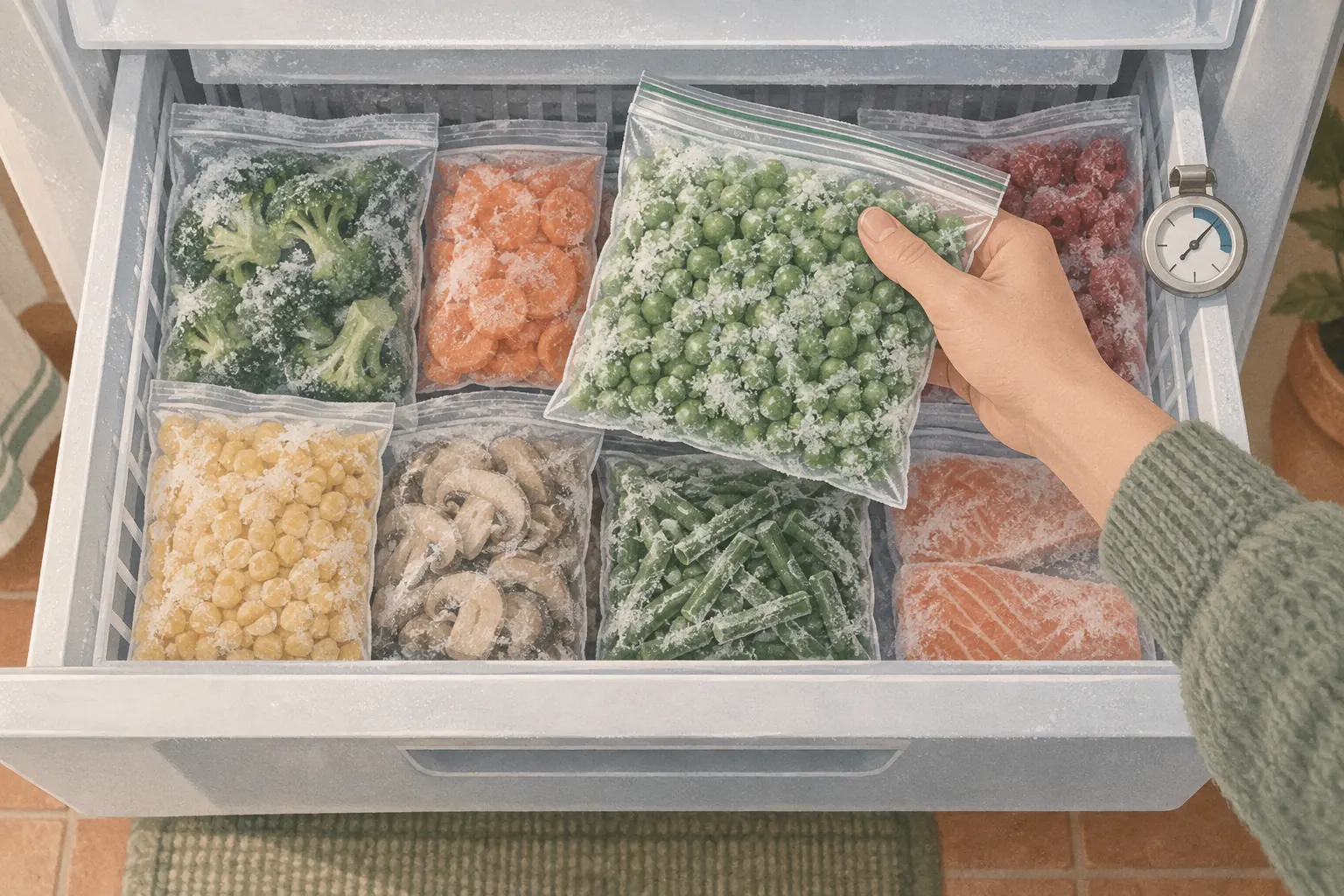
- Put an appliance thermometer in the fridge and one in the freezer. When the power comes back, a number beats a guess, and the whole keep-or-discard question turns on 40°F.
- Freeze water in containers. Full freezers hold their temperature twice as long as half-empty ones, and frozen jugs can be moved into the fridge when the power goes.
- Keep a cooler and gel packs. In FSIS's words, "coolers are a great help for keeping food cold if the power will be out for more than 4 hours".
- Know what is in there. A freezer inventory sheet on the door means you can decide what to eat first without standing with the door open.
While the power is out
Keep both doors shut. Every opening costs cold air, and the 4-hour and 48-hour figures assume the doors stay closed. If the outage will run longer, move what matters into a cooler with ice or gel packs, and eat the refrigerated food first: the freezer is buying you two days, the fridge four hours.
Group the freezer contents together. FSIS puts it plainly: "When your freezer is not full, keep items close together, this helps the food stay cold longer." For a long outage the agency also suggests dry or block ice, and gives a figure: "Fifty pounds of dry ice should hold an 18-cubic foot full freezer for 2 days."
When the power comes back
Read the thermometers first. If the freezer is at 40°F or below, or the packages still have ice crystals, the chart lets you refreeze. If the fridge went above 40°F for more than two hours, work down the discard column. If you have never checked what yours reads day to day, what temperature a fridge should be covers the setting and the measurement.
Then add up what you threw away, because it is rarely a small number. Our food waste calculator turns a bin bag of food into a yearly figure, and a written list of what went is worth keeping if you plan to ask anyone to cover it.
If you photograph grocery receipts into Duneed, our iPhone app, most of that list already exists: what you bought and the price you paid for each item.
Common questions
How long does food last in the fridge without power?
About 4 hours with the door unopened, in USDA's guidance. After that the federal chart decides food by food, and perishable items above 40°F for more than two hours are on the discard side.
How long will a freezer keep food frozen without power?
About 48 hours if it is full and the door stays closed, 24 hours if it is half full.
Can you refreeze food that thawed in a power cut?
FoodSafety.gov says food may be refrozen if it still contains ice crystals or is at 40°F or below, with some loss of quality. Ice cream and frozen yogurt are the exception: discard.
Is milk safe after a power outage?
Milk is on the discard list once it has been above 40°F for more than two hours. Butter and margarine, on the same chart, are on the keep side.
Should I taste food to check it?
No. The chart's own instruction is "Never taste food to determine its safety."
What about the food in the fridge door?
The door is the warmest part of a refrigerator even when the power is on. Condiments there (mustard, ketchup, pickles, jelly) are on the keep list anyway; mayonnaise is the one to check, and the chart gives it 8 hours above 50°F.
Sources
- Keeping Food Safe During an Emergency fsis.usda.gov
- FoodSafety.gov foodsafety.gov
- Food Safety During Power Outage foodsafety.gov
Found a mistake? Tell us and we will correct it: support@duneed.app