
Pantry moths: how to get rid of them, and what does not work
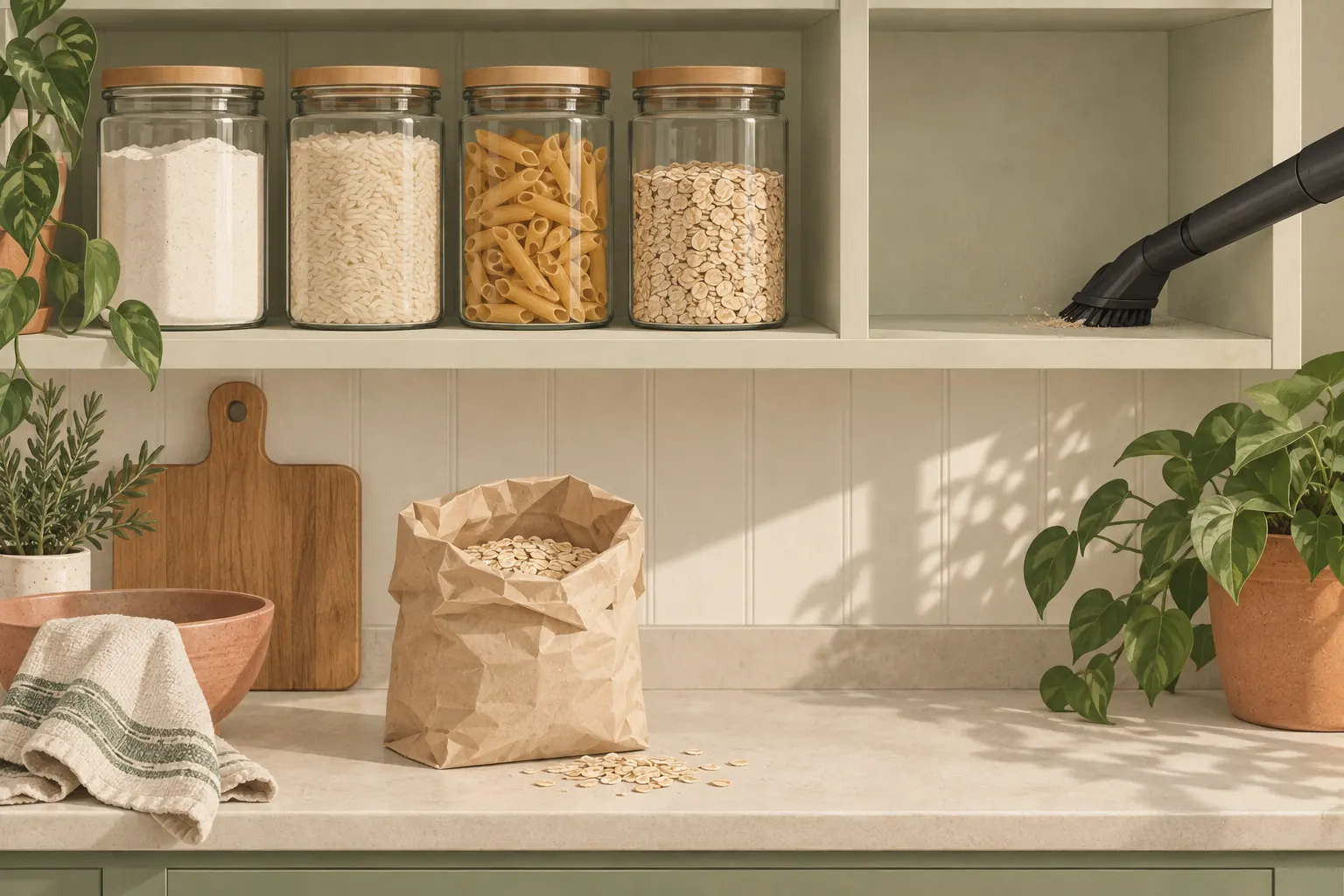
Finding a moth in the cupboard is not a hygiene problem. Pantry pests arrive inside food you bought, and the fix is the same either way: find the infested package, throw it out, vacuum the cupboard, and put everything else in containers they cannot get into.
The University of Minnesota Extension sets that out plainly, and it also settles two arguments that come up in every thread on the subject. Bay leaves do not work. Insecticides are the wrong tool.
Find the source first
The commonest culprit is the Indianmeal moth, and the way to identify an infested packet is to look for webbing. UMN Extension's list of what they get into is longer than most people expect:
Cereal products (flour, cake mix, cornmeal, rice, spaghetti, crackers, and cookies), seeds such as dried beans and popcorn, nuts, chocolate, raisins and other dried fruits, spices, powdered milk, tea, cured meats.
And the ones nobody checks: "birdseed, dry pet food, ornamental corn, dried flowers and plants, garden seeds, potpourri and rodent baits." A bag of birdseed in the garage is a common answer to "we cleaned everything and they came back".
Opened packets are the usual home, but the extension service notes they "can get into unopened paper, thin cardboard" packaging as well. Cardboard is not a barrier.
The removal, in the order that works
- Throw away infested food. Not the shelf, not the cupboard: the packets with webbing in them.
- Vacuum the cabinets and shelves, especially cracks and corners, which picks up crawling insects and spilled material. Then "empty the vacuum cleaner or discard the vacuum cleaner bag after use to prevent re-infestation". The bag is where they live otherwise.
- Skip the bleach. UMN: "Washing shelves with detergent, bleach, ammonia, or disinfectants will not keep pantry pests from returning and could be dangerous if the chemicals come in contact with food."
- Re-house everything else. Store food "in sealable glass, metal, or heavy plastic containers or in the freezer or refrigerator until you are sure the infestation is gone". Zip bags and cardboard boxes are not containers for this purpose.
- Treat anything you are unsure about. The extension's numbers: freezer at 0°F for at least four days, or a shallow pan in an oven at 130°F for at least 30 minutes. "These temperatures will kill any eggs or insects."
Three weeks of moths is normal
This is the part that sends people back to the shops for another spray. From the same page:
It is not unusual to see an Indianmeal moth flying for up to three weeks after the infested food has been thrown out. However, if you continue to see Indianmeal moths after three weeks, that means there is an infested food source that you haven't found yet.
So the test is time. A few stragglers for a fortnight means the job worked. Moths in week four means you missed a packet, and the pet food, birdseed and decorations are where to look.
What does not work
- Bay leaves, spearmint gum and the rest. UMN is blunt: "There is no evidence that placing bay leaves or sticks of spearmint gum in a cupboard will prevent or get rid of stored food insect pests."
- Insecticides in the food cupboard. "Insecticides are not recommended for controlling insects in stored food cupboards. Household insecticides have no effect on insects inside food packages." Worse, "any food that comes in contact with insecticide must be thrown away".
- Cleaning without finding the source. Any control outside the packaging is temporary while the infested packet is still on a shelf.
Pheromone traps have a role, but it is diagnostic: they catch male moths and tell you whether the problem is still live. They do not clear an infestation on their own.
Keeping them out
Containers are the whole of the prevention. Glass jars with a seal, metal tins, or heavy plastic with a gasket, for flour, rice, oats, pasta, nuts, dried fruit, spices, pet food and birdseed. Everything else is optional.
Two habits help the containers do their work:
- Buy what you will use. A three-month bag of flour is three months of opportunity. Our pantry staples list is the short version of what earns shelf space.
- Rotate and date. Oldest at the front, and a date on the lid. How to organize a pantry sets out zones and first-in-first-out, and the pantry inventory list is a printable for the door.
Duneed, our iPhone app, handles the dating half of that: it builds the pantry list from photographed grocery receipts and flags an item as a date you set gets close.
Common questions
How do I know which food has pantry moths?
Look for webbing in the packet. That is the sign UMN Extension gives, and it is usually clearer than trying to spot larvae.
Do bay leaves keep pantry moths away?
No. The extension service says there is no evidence for bay leaves or spearmint gum as a prevention or a cure.
Should I spray the cupboard?
Not with household insecticides. They have no effect on insects inside food packages, and any food that contacts insecticide has to be thrown out.
Can I save flour or rice that might be infested?
The extension's method is heat or cold: 0°F for at least four days in the freezer, or 130°F for at least 30 minutes in a shallow pan in the oven. Both kill eggs and insects.
Why are there still moths after I cleaned?
Up to three weeks of flying moths is normal after the source is gone. After that, there is another infested packet somewhere, often pet food, birdseed or a decoration made with seeds.
Are pantry moths dangerous?
That is a question for a health authority rather than for us. On the practical side, UMN Extension's advice is about finding and removing infested food and storing the rest in sealed containers.
Sources
- University of Minnesota Extension extension.umn.edu
Found a mistake? Tell us and we will correct it: support@duneed.app