
How to organize a pantry: zones, first in first out, and no new bins required
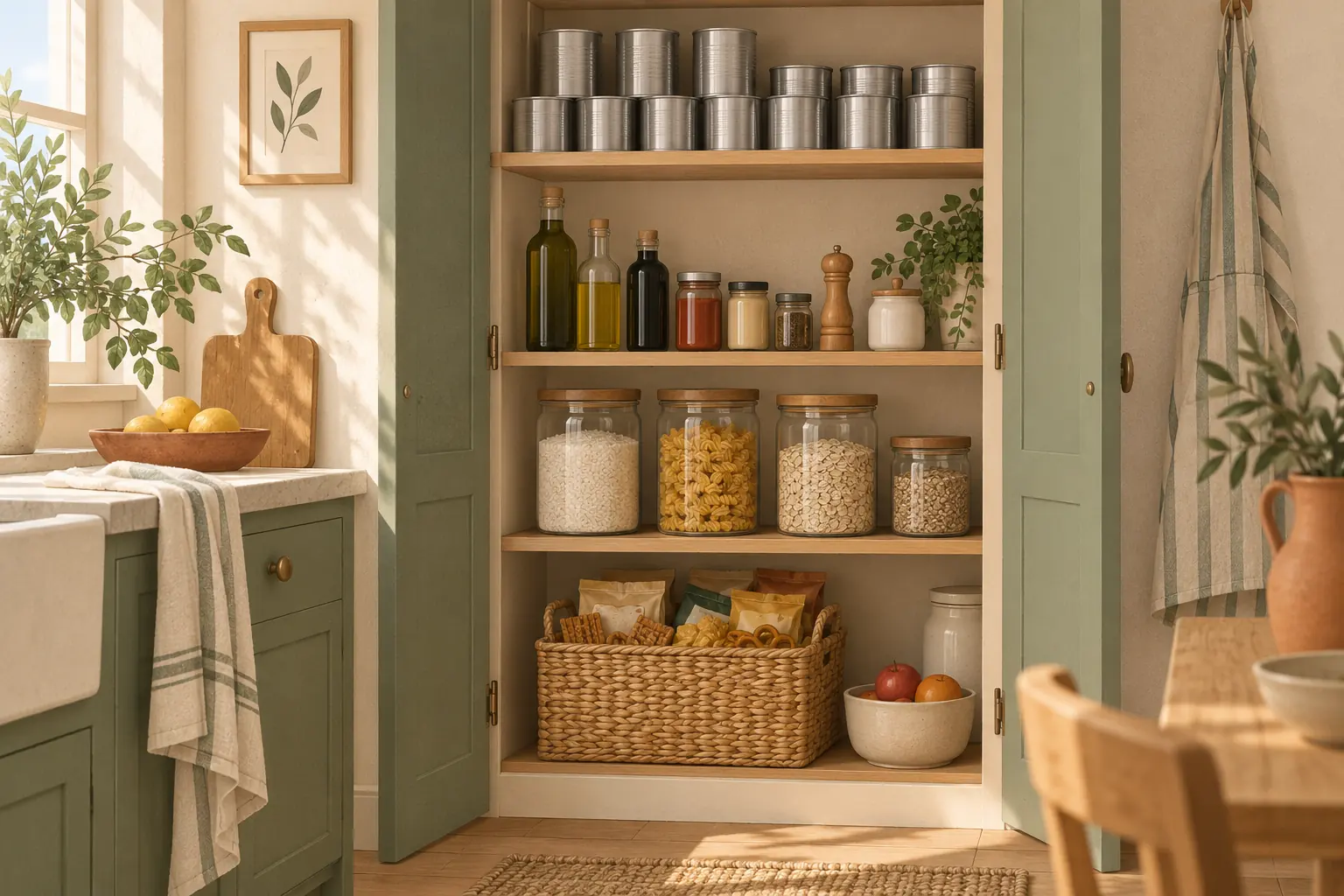
To organize a pantry, take everything out, keep only what you'll use, then put it back in zones by how you cook: everyday items at eye level, backups and bulk on the top or bottom shelf, and within every zone the oldest at the front. That last rule, first in, first out, does more for a pantry than any container, and it costs nothing.
The rest of this guide is the order to do it in, how to lay out shelves by type of pantry, and the one habit that keeps it organized after the first weekend.
Step 1: take everything out
All of it, shelf by shelf, onto the counter or the table. A pantry you organize in place is a pantry where the same can of water chestnuts stays hidden at the back.
As things come out, sort them into three piles:
- Keep: things you use and will use.
- Use soon: open packs, anything near its date, and anything you'd forgotten you had.
- Go: stale snacks, spices that no longer smell of anything, and duplicates of things you'll never finish.
For anything in a can, check it as it comes out. USDA's Food Safety and Inspection Service says not to buy bulging, rusted, leaking or deeply dented cans, and has specific guidance on each; canned food shelf life sets it out. Open bags of flour, grains and cereal are worth a look too, for holes in the packaging or small insects.
Step 2: clean the shelves
Wipe the shelves and vacuum the corners before anything goes back. The University of Minnesota Extension's guide to pantry pests recommends thoroughly cleaning the cracks and corners of cupboards with a vacuum cleaner, and says washing with detergent, ammonia or bleach will not prevent an infestation.
Step 3: put it back in zones
Group by how you cook, not by what the packaging looks like. A zone is a shelf or a section of a shelf that holds one kind of thing, so you always know where to look and where to put it back.
| Zone | What goes in it |
|---|---|
| Grains and pasta | Rice, pasta, oats, flour you use weekly |
| Cans and jars | Beans, tomatoes, fish, broth, sauces |
| Oils, vinegars and condiments | Everything you reach for while cooking |
| Baking | Flour, sugar, baking powder, chocolate, vanilla |
| Breakfast | Cereal, oats, nut butter, honey |
| Snacks | Crackers, nuts, dried fruit |
| Backups | The second jar of everything, bulk bags, anything bought on sale |
Where each zone goes matters more than what it's kept in:
- Eye level: what you use every day. For most kitchens that's oil, salt, pasta, rice and the open box of cereal.
- Lower shelves: heavy things (cans, big bags of rice) and, in a home with children, their snacks.
- Top shelf: backups and anything used once a month.
- Door racks and narrow shelves: spices and small jars, in a single row so none hide behind another.
Keep a backups zone even in a small pantry. It's what stops the second jar of peanut butter being opened before the first is finished.
Step 4: first in, first out
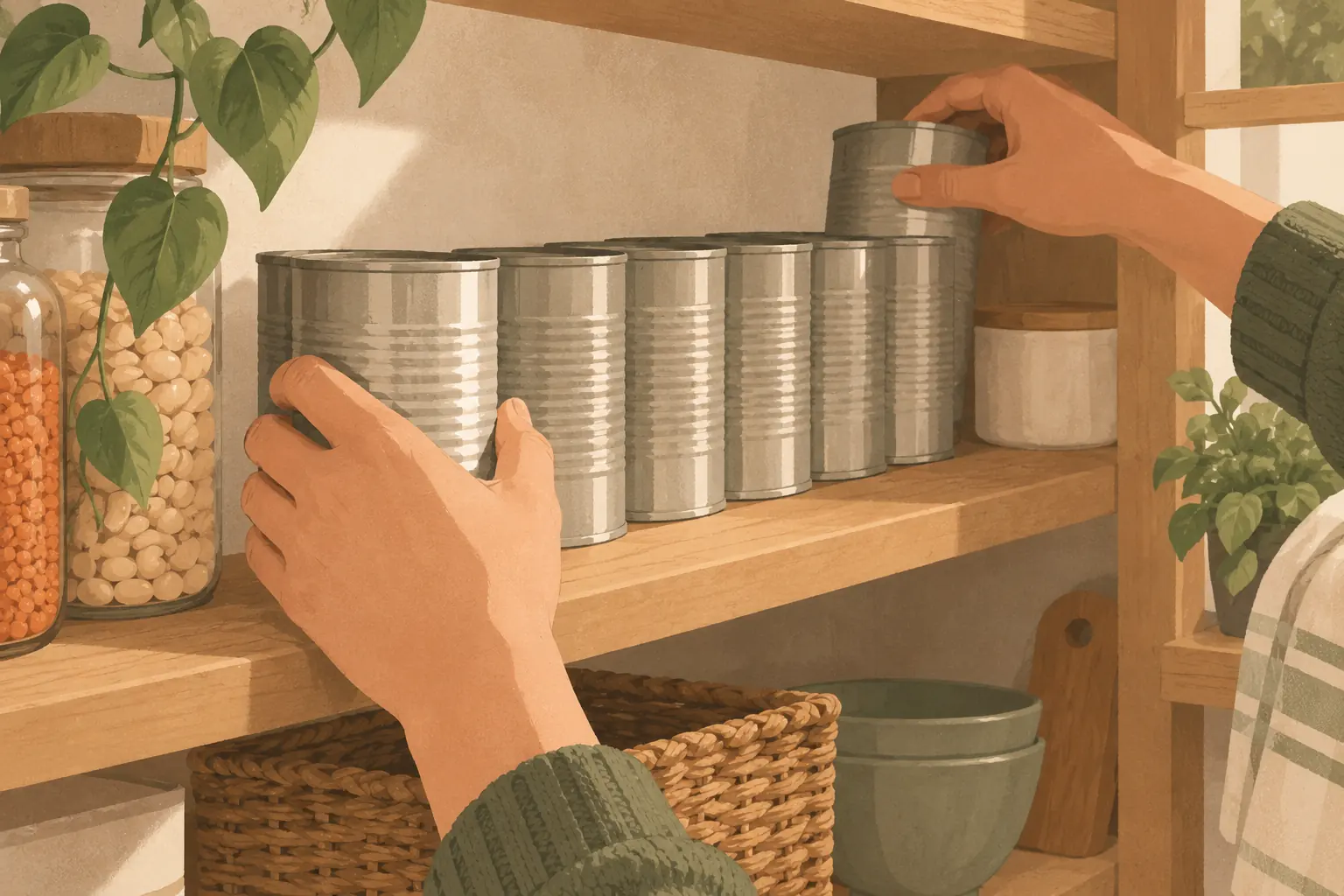
Put new purchases behind the old ones, every time. Utah State University Extension calls this first in, first out and recommends writing the purchase month and year on can lids with a marker.
This is the single habit that keeps a pantry working. It turns "the back of the cupboard" from a place things disappear into a queue, and it means the older jar is always the one in your hand.
For deep shelves, where things at the back vanish, the fix is to use the depth for rows of the same item: three cans of chickpeas one behind another, so pulling the front one reveals the next. Mixed items two deep is how a pantry fills with forgotten things.
Containers: what's worth buying
You don't need matching containers to organize a pantry. Most of what a pantry holds is already in a can, jar or box that stacks.
Containers earn their place in two cases:
- Open bags of flour, grains, cereal, nuts and dried fruit, which spill and attract insects. UMN Extension recommends storing insect-free foods in tightly closed glass, metal or heavy plastic containers.
- Small loose packets (sauce mixes, spice packets, gravy granules) that slide behind everything else. One small bin per type keeps them in view.
When you decant something, write the date on the container or keep the date panel from the bag inside it. A clear jar of rice with no date is the same problem as a can at the back of the shelf.
Where the pantry is matters
Heat is the enemy of anything stored for months. Purdue Extension gives 50 to 70°F as the range for storing canned food, and FSIS's shelf-stable food guidance says never to store cans above or beside the stove, under the sink, or in a damp garage or basement.
In practice, the cupboard above the oven or next to the dishwasher is the worst place in a kitchen for backups. If that's where the pantry is, keep it for the everyday things that are used within weeks, and put long-term stock somewhere cooler.
Keeping it organized
A pantry stays organized when you know what's in it without opening the door. Two ways:
- A list on the inside of the door, updated when you unpack the shopping and when you use the last of something. Our pantry inventory list is a free printable with columns for quantity, purchase date and best-by date.
- A quick reset once a month: pull everything forward on each shelf, move anything with a near date to eye level, and add what's running low to the list. It takes ten minutes, and it's also when you'll spot the small beetles in dried foods that UMN lists among the signs of pantry pests.
Knowing what's already there is also what makes the shopping cheaper. Checking the pantry before writing the list stops the duplicates, and meal planning from your pantry turns the use-soon zone into dinners. If you're stocking an empty pantry from scratch, our pantry staples list has 57 staples in groups much like the zones above. The fridge runs on the same first in, first out rule with a shelf order of its own, covered in how to organize your fridge.
Duneed, our iPhone app, builds the pantry list from photographed grocery receipts, so what you bought is on the list before it's on the shelf, and it flags anything you gave a date to as that date approaches.
Common questions
How do I organize a small pantry?
Keep only one zone per shelf, use the door and the backs of doors for spices and small jars, and move backups somewhere else in the house if there's no room for them. First in, first out matters as much in a small pantry as in a big one: the back of a shallow shelf fills up just as fast.
What is the best way to organize a pantry?
By zone, based on how you cook, with everyday items at eye level and the oldest of everything at the front. Containers help for open bags and small packets, not for everything.
How do I organize a deep pantry?
Use the depth for rows of the same item, one behind another, rather than two rows of different things. Bins you can pull out like drawers help for small items at the back.
How do I keep bugs out of my pantry?
UMN Extension recommends checking packages for holes when you buy them, storing insect-free foods in tightly closed glass, metal or heavy plastic containers, cleaning up spills straight away and throwing out old, unused products. It also says there's no evidence that bay leaves or spearmint gum keep insects away. If something already has webbing in it, how to get rid of pantry moths is the next step.
How often should I organize my pantry?
A full clear-out once or twice a year, and a ten-minute reset once a month.
Sources
- pantry pests extension.umn.edu
- first in, first out extension.usu.edu
- Purdue Extension extension.purdue.edu
- shelf-stable food guidance fsis.usda.gov
Found a mistake? Tell us and we will correct it: support@duneed.app