
Canned food shelf life: the USDA chart, and what the date on a can means
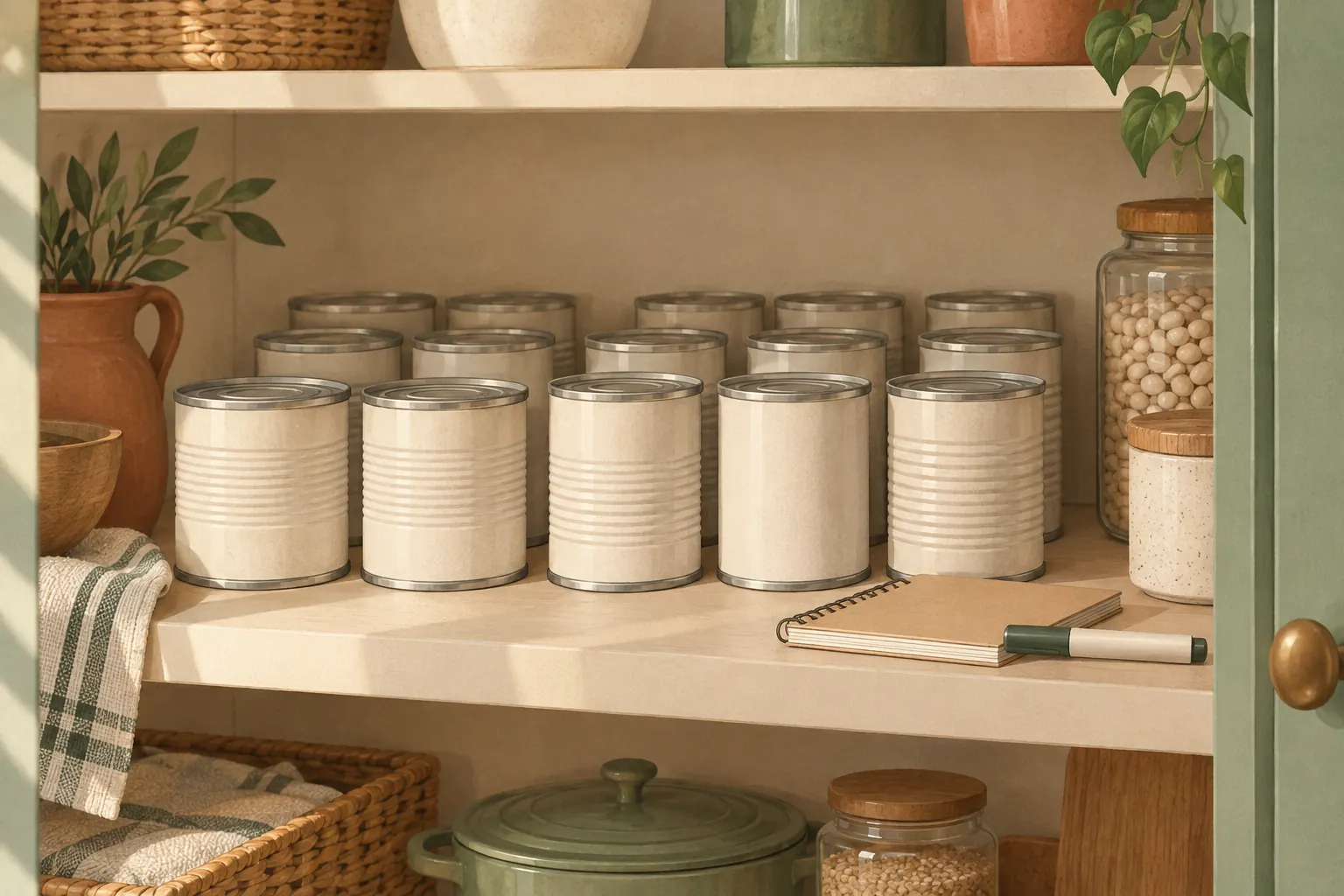
USDA's Food Safety and Inspection Service gives unopened canned food two shelf lives: 12 to 18 months for high-acid foods like tomatoes, fruit and pickles, and 2 to 5 years for low-acid foods like canned meat, soups, beans and most vegetables. Once a can is open, FSIS gives 5 to 7 days in the fridge for high-acid foods and 3 to 4 days for low-acid ones.
We're not a food safety authority, so everything in this guide about whether a can should be eaten is FSIS's, in its words, with a link. The storage and rotation habits that keep cans at their best are ours.
Canned food shelf life chart
This is FSIS's shelf-stable food storage chart for canned goods (page last updated October 24, 2024):
| Canned food | Unopened, on the shelf | After opening, in the fridge |
|---|---|---|
| Low-acid canned goods | 2 to 5 years | 3 to 4 days |
| High-acid canned goods | 12 to 18 months | 5 to 7 days |
| Canned ham, shelf-stable | 2 to 5 years | 3 to 4 days |
| Home-canned foods | 12 months | 3 to 4 days |
FSIS's examples of each:
- Low-acid: canned meat and poultry, stews, soups (except tomato), spaghetti and other pasta products, potatoes, corn, carrots, spinach, beans, beets, peas and pumpkin.
- High-acid: juices (tomato, orange, lemon, lime and grapefruit), tomatoes, grapefruit, pineapple, apples and apple products, mixed fruit, peaches, pears, plums, all berries, pickles, sauerkraut, and foods in vinegar-based sauces or dressings.
The difference comes down to what the food does to the can. FSIS explains that natural chemicals in food keep reacting with the container, especially in high-acid foods like tomatoes, and that over several years this can change the taste and texture and eventually lower the nutritional value. That's why the tomatoes have the shorter window.
Not every can is shelf-stable
FSIS makes a point people miss: some canned food isn't meant for the cupboard at all. Some canned hams and some canned seafood are labeled "Keep Refrigerated", and FSIS says those aren't safe at room temperature. It gives refrigerated canned hams up to 6 to 9 months in the fridge.
So the first thing to read on an unfamiliar can is the storage line, before any date.
What the date on a can means
Most cans carry one of two things, and sometimes both:
- A "Best if Used By" or "Best By" date. FSIS says this shows when a product will be at its best flavor or quality, and that it is "not a purchase or safety date".
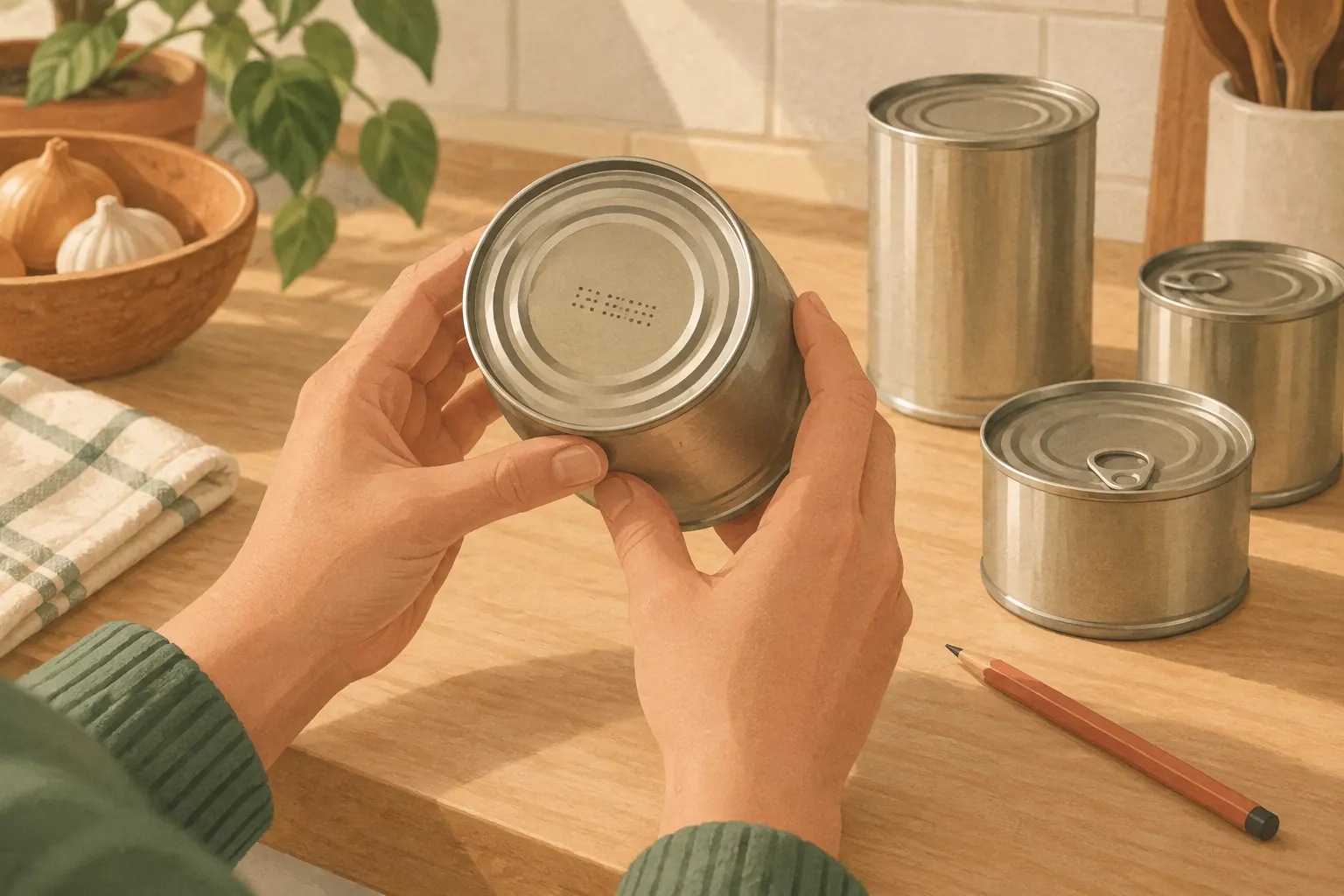
- A code of letters and numbers stamped on the lid or the base. FSIS calls these closed dates: codes for rotating stock and tracing a recall, not meant to be read as a best-by date.
Many can codes include a day-of-year date (074 is March 15 in an ordinary year). Our Julian date converter turns those into a calendar date, and it will tell you what it can't: on most cans the code is a packing date, not a best-by date.
Federal law doesn't require a date on canned food at all. Except for infant formula, FSIS says product dating is not required by federal regulations. The full picture of US, UK and EU date labels is in best before vs use by vs sell by.
Is canned food still good after the expiration date?
This is FSIS's answer, not ours. On its food product dating page, FSIS says foods not showing signs of spoilage "should be wholesome and may be sold, purchased, donated and consumed" beyond a "Best if Used By" date. On canned food specifically, it lists the signs that mean a can should not be used, which are in the next section.
What changes with time is quality: FSIS's own explanation of can corrosion is about taste, texture and nutrients drifting over years, which is why the chart gives ranges rather than a single date.
Dented, rusted, bulging or frozen cans: what FSIS says
FSIS's guidance, summarized with its own conditions:
| What you see | What FSIS says |
|---|---|
| Bulging, leaking or swollen can | Don't use it; discard it. FSIS lists these among possible botulism warnings. |
| Deep dent, especially on a seam | Discard deeply dented cans. A deep dent is one you can lay a finger into; a sharp dent on the top or side seam can let bacteria in. |
| Small dent, can otherwise in good shape | FSIS says the food should be safe to eat. |
| Heavy rust | Discard; heavily rusted cans can have tiny holes. |
| Light surface rust that rubs off | FSIS says it is not serious and the can can be kept. |
| Rust inside the can once opened | FSIS says don't eat the food. |
| Can that froze by accident | Discard it if it swelled, or if it thawed at 40°F or higher. An intact can that is still frozen can be thawed in the fridge; FSIS's full instructions are on its page. |
| Loud hiss or contents spurting out when opened | FSIS says don't taste or use it. A soft hiss from a vacuum-packed can is normal. |
FSIS's advice at the store is simpler: don't buy bulging, rusted, leaking or deeply dented cans.
How to store canned food so it lasts
FSIS's storage advice is short: a cool, dry place, ideally below 85°F. It says never to store cans above or beside the stove, under the sink, in a damp garage or basement, or anywhere exposed to high or low temperature extremes, and that temperatures over 100°F are harmful to canned goods.
The habits that make that work in a real kitchen:
- Keep cans in a cupboard away from the oven and the dishwasher, not in the garage.
- Put new cans at the back and move the older ones forward. FSIS suggests checking the pantry every few weeks and using the cans you've had for a while.
- Write the purchase month on the lid with a marker if the can has no readable date.
- Keep a short list of what's there. Our free pantry inventory list has a date column for exactly this.
Once a can is open, FSIS says the leftovers can go in the fridge in the can, but for the best quality and flavor it suggests moving them to a glass or plastic container.
Home-canned food
FSIS gives home-canned food 12 months on the shelf and 3 to 4 days in the fridge once opened. It also says the botulism risk is greater for home-canned foods that weren't processed with safe canning methods, and gives specific instructions for boiling low-acid and tomato foods before eating if there's any chance the method wasn't followed. Those instructions are on the FSIS page; follow them from the source rather than from a summary.
Keeping track of what's in the cupboard
Canned food is the easiest thing in a kitchen to forget, because it doesn't go off in a way you can see. The fix is the same as for everything else in the pantry: know what you have and eat the oldest first. How to organize a pantry sets out the zones and the first in, first out routine. For flour, rice, spices and the rest of the cupboard, our pantry shelf life lookup searches USDA's FoodKeeper times.
A few cans of beans, tomatoes and fish are the backbone of a cheap week, which is why they're high on our pantry staples list and why meal planning from your pantry starts with the cupboard. Buying them in bulk only makes sense if you'll get through them inside their window; is buying in bulk cheaper has the arithmetic.
Duneed, our iPhone app, adds cans to a pantry list from a photographed receipt, and if you give an item a date it flags it as that date approaches, so the six-month-old tin of chickpeas comes up before you buy another.
Common questions
How long does canned food last?
According to USDA FSIS, unopened high-acid canned food such as tomatoes and fruit keeps 12 to 18 months, and low-acid canned food such as meat, soups, beans and most vegetables 2 to 5 years, stored in a cool, dry place.
How long do canned goods last after opening?
FSIS gives 5 to 7 days in the fridge for high-acid foods and 3 to 4 days for low-acid foods, including canned meat, soups and vegetables.
Is it OK to eat canned food after the best by date?
FSIS says a "Best if Used By" date is about quality, not safety, and that food not showing signs of spoilage may be eaten beyond it. For cans, it lists the signs that mean the can should be thrown away: bulging, leaking, heavy rust, deep dents, and cans that spurt when opened.
Does canned food really last 5 years?
FSIS's upper limit for low-acid canned goods is 5 years, stored properly. High-acid foods have a shorter range, 12 to 18 months, because they react with the can over time.
Where is the expiration date on a can?
Usually on the lid or the base, either as a "Best By" date or as a stamped code. A number like 26074 is often a day-of-year code; our Julian date converter reads it.
Sources
- shelf-stable food storage chart fsis.usda.gov
- food product dating page fsis.usda.gov
Found a mistake? Tell us and we will correct it: support@duneed.app