First apartment grocery list: what to buy on day one, week one and month one
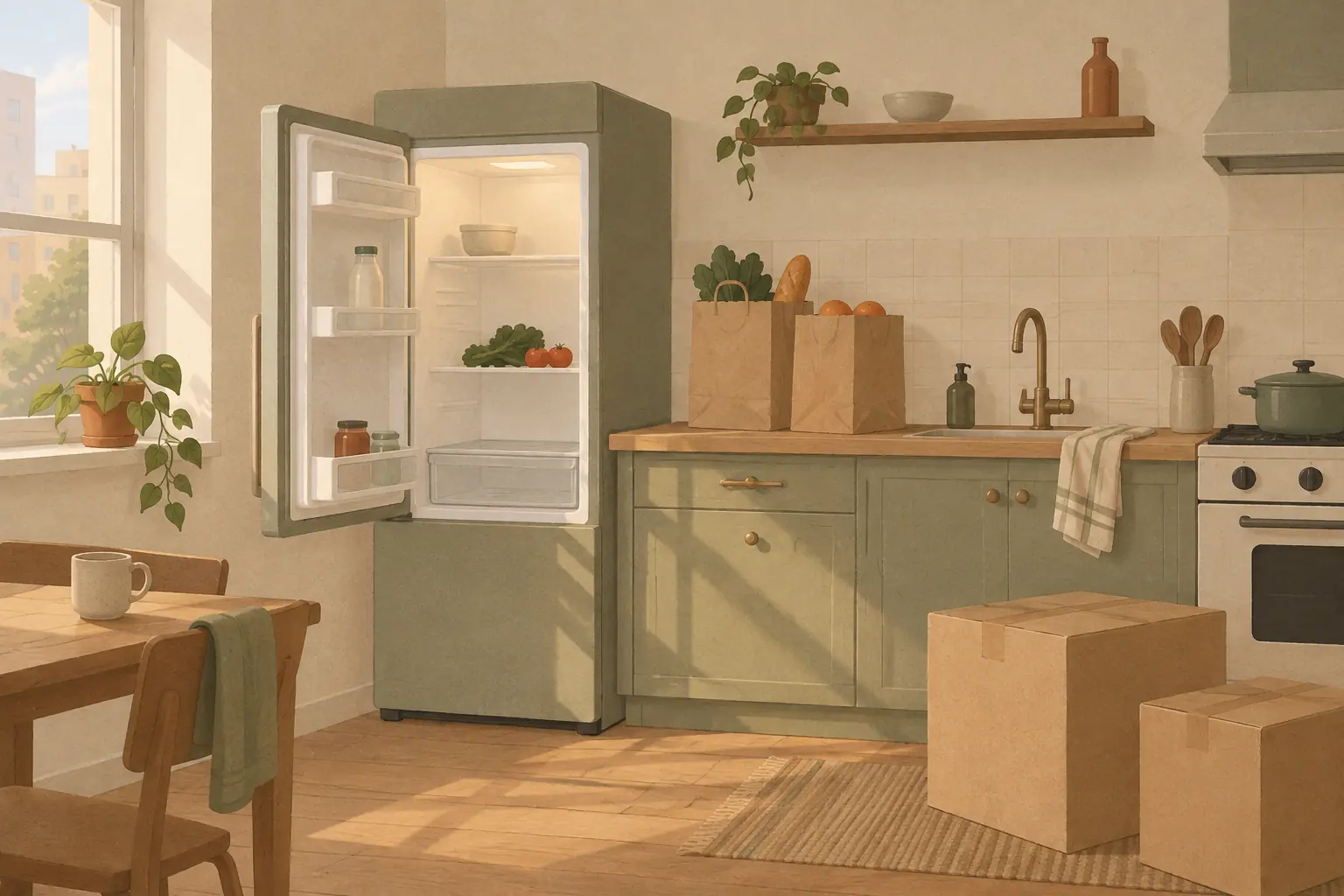
A first apartment grocery list works best in four stages: a small day-one shop so you can eat tonight and tomorrow morning, a first-week shop of fresh food, a pantry you build over the first month, and a list of things that can wait. Buying everything on the first trip is the most expensive way to stock a kitchen, and a lot of it ends up unused.
The four lists are below, along with the non-food items a new kitchen needs, the two food safety numbers every first-time renter should know, and a realistic monthly budget for one person using USDA's own figures.
What a first apartment grocery budget looks like
USDA's Thrifty Food Plan for July 2026 prices a healthy diet for one adult aged 20 to 50 at $58.60 a week for a woman and $73.70 for a man. Those figures are for someone in a four-person household; the same report says to add 20% for a person living alone.
| Living alone, July 2026 | Thrifty plan, per week | Thrifty plan, per month |
|---|---|---|
| Woman, 20 to 50 | $70.32 | $304.68 |
| Man, 20 to 50 | $88.44 | $383.04 |
Our arithmetic from USDA's figures, with the 20% single-person adjustment. Monthly is USDA's own figure times 1.2.
The Thrifty plan is USDA's lowest-cost plan, and it assumes every meal is cooked at home. USDA is clear that it's a framework rather than a shopping list: the Thrifty Food Plan, 2021 report says it is not intended to be an item-specific shopping list or a prescriptive diet. The same report notes that cooking at home doesn't have to mean cooking from scratch, and gives frozen precut vegetables and canned precooked beans as examples of convenience foods that fit.
If you want more room than the Thrifty plan, grocery budget for one person has all four USDA plans for every adult age, and our grocery budget calculator works it out for your age.
The first month usually costs more than the rest, because you're buying oil, salt, spices and sauces that last for months. Expect the second month to be cheaper than the first.
Day one: tonight and tomorrow morning
Keep the first trip small. You don't know yet where things go, how big the fridge is, or what you'll actually cook.
- Something for dinner that needs almost no equipment: a bag of salad and a rotisserie chicken, or pasta and a jar of sauce
- Bread or bagels
- Eggs
- Milk or a plant milk
- Butter
- Coffee or tea
- Fruit you can eat without a knife: bananas, apples, clementines
- A few bottles of water if you don't trust the tap yet
- Salt and pepper
That's it. Everything else waits until you've unpacked and seen the kitchen.
Week one: fresh food for a few dinners
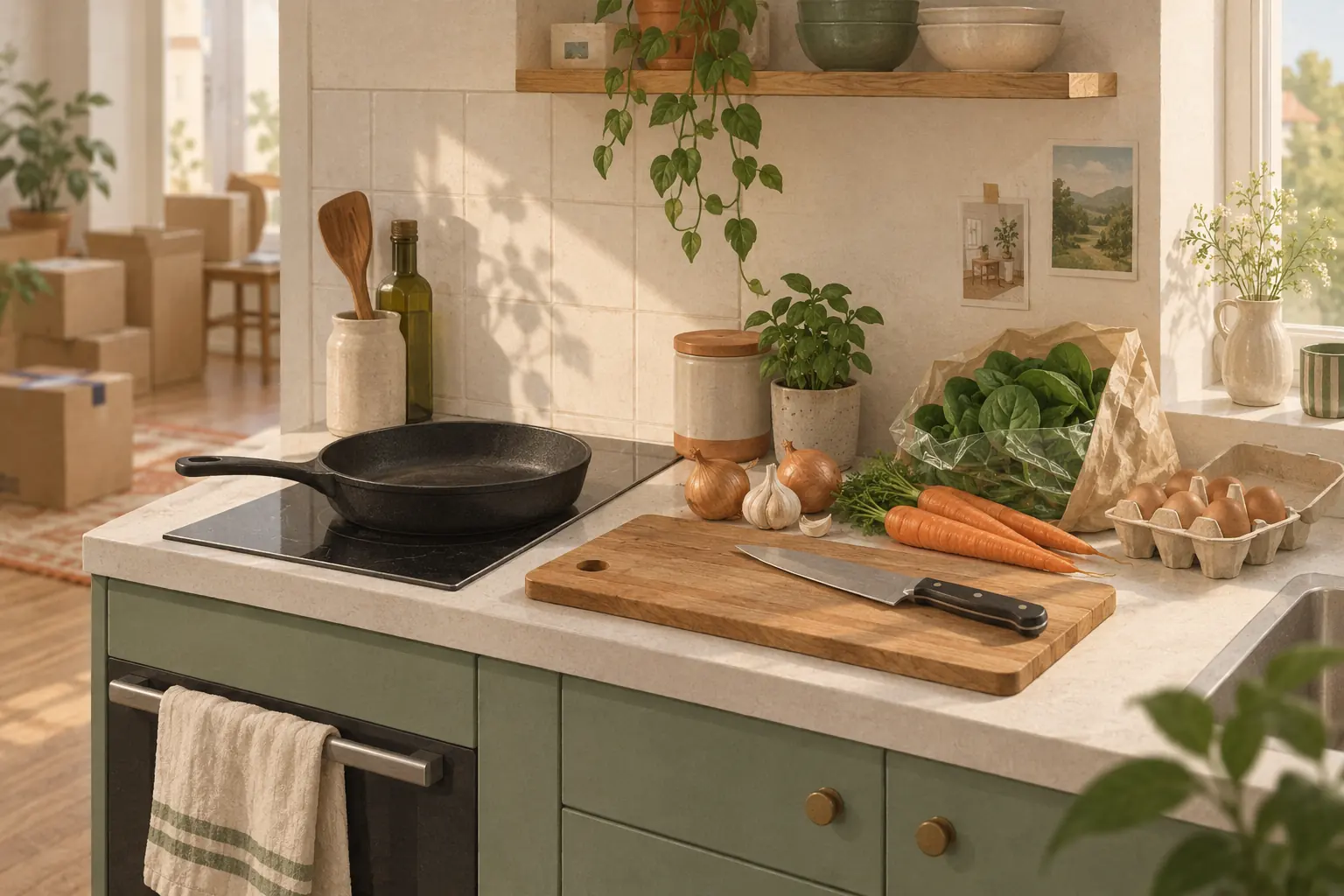
By the end of the first week you'll know which pans you have and how much space the fridge gives you. This is the first real shop.
| Section | Buy |
|---|---|
| Produce | Onions, garlic, potatoes, carrots, a head of lettuce or bag of spinach, lemons, fruit for the week |
| Meat and protein | One or two proteins you know how to cook, like chicken thighs or ground beef, or tofu |
| Dairy and eggs | Eggs, cheese, yogurt |
| Bakery | A loaf of bread or tortillas |
| Frozen | Frozen vegetables, frozen fruit for breakfast |
| Pantry | Rice or pasta, a can of beans, a can of tomatoes |
Plan three or four dinners, not seven. The first weeks in a new place are full of nights you won't cook. Our printable grocery list is set out in store order with a column for quantities, which helps on the first few trips when you don't know the store yet either. Where each of those goes once you're home, fridge or counter, is in how to store produce.
Month one: build the pantry a few items at a time
A pantry is the part of a kitchen that lets you cook without shopping first. It's also where first-time renters overspend, because a starter pantry list of 50 items looks sensible in the store and then much of it sits unopened for months.
Build it from what you actually cook. Add three or four staples per trip, starting with the ones that show up in most meals:
- Oil, salt, black pepper
- Rice, pasta, rolled oats
- Canned tomatoes, canned beans, broth or bouillon
- Soy sauce, hot sauce, one vinegar
- Garlic powder, chili flakes, one dried herb you like
- Peanut butter, flour, sugar
Our pantry staples list has a 20-item first-apartment starter pantry and a printable checklist, plus which staples keep for years and which to buy small.
What can wait
These are the things that feel like they belong in a kitchen and don't need to be bought in month one:
- A full spice rack. Buy spices one at a time when a recipe calls for them.
- Specialty flours, grains and baking ingredients, unless you already bake.
- Big packs of anything perishable. Buying for one person means smaller packs, even at a higher unit price.
- Condiments you've never used.
- Bulk-club memberships. With one person's appetite and a small kitchen, the discount rarely survives what goes to waste; we work through the numbers in is buying in bulk cheaper and is a Costco membership worth it.
The non-food starter kit
These come off the same shopping trips and are easy to forget until the first night you need them.
| For | Buy |
|---|---|
| Washing up | Dish soap, sponges, a dish towel or two |
| Trash | Trash bags that fit your can |
| Storage | Foil or plastic wrap, a few food storage containers, zip-top bags |
| Cleaning | All-purpose cleaner, paper towels |
| Bathroom | Toilet paper, hand soap |
| Food safety | A fridge thermometer and a food thermometer |
The two thermometers are small purchases and the easiest to leave off.
Two food safety numbers for a new kitchen
We're not a food safety authority, so these are the federal figures, attributed.
The first is the fridge temperature. The federal cold food storage chart sets its refrigerator times for 40°F (4°C) or below and its freezer times for 0°F (-18°C) or below. Apartment fridges are often set by whoever lived there before, so put a thermometer inside and check it on day one. A printable version of the chart is in how long does food last in the fridge.
The second is cooking temperature. FoodSafety.gov says to always use a food thermometer to check whether meat has reached a safe minimum internal temperature. The ones a new cook needs most:
| Food | Safe minimum internal temperature |
|---|---|
| Chicken and turkey, all cuts including ground | 165°F (74°C) |
| Ground meat and sausage | 160°F (71°C) |
| Beef, pork and lamb steaks, roasts and chops | 145°F (63°C), then rest 3 minutes |
| Egg dishes like a frittata | 160°F (71°C) |
| Leftovers and casseroles | 165°F (74°C) |
The same cold storage chart gives raw ground meat and chicken 1 to 2 days in the fridge and cooked leftovers 3 to 4 days. If you're cooking for one, that's the number that decides how much fresh meat to buy at a time, and the reason to freeze half a pack on the day you buy it.
Shopping for one without throwing food away
A lot of the waste in a one-person kitchen is food bought for meals that never happened. A few habits cut most of it:
- Buy fresh food for three or four dinners, and fill the rest of the week from the pantry and freezer.
- Split family packs of meat into portions and freeze them the day you get home.
- Cook once, eat twice. Leftovers for lunch are the cheapest meal you'll make.
- Before each shop, check what's already there. Meal planning from your pantry is a short routine for exactly this.
Duneed, our iPhone app, builds a list of what's in your kitchen from photographed grocery receipts and flags items as the date you gave them approaches, so you can see what needs using before you buy more.
Common questions
What groceries should I buy for my first apartment?
Start small: dinner for the first night, bread, eggs, milk, coffee, fruit, salt and pepper. In the first week add fresh produce, one or two proteins, dairy and a few pantry basics like rice, pasta and canned tomatoes. Build the rest of the pantry over the first month from what you actually cook.
How much should I budget for groceries in my first apartment?
On USDA's Thrifty plan for July 2026, one adult aged 20 to 50 living alone comes to about $305 a month for a woman and $383 for a man, with every meal cooked at home. Expect the first month to cost more, because you're buying pantry basics that last.
What kitchen supplies do I need for a first apartment?
For groceries, the non-food basics are dish soap, sponges, trash bags, foil, food storage containers, paper towels and an all-purpose cleaner. Add a fridge thermometer and a food thermometer.
What should I not buy for my first apartment?
A full spice rack, specialty ingredients you haven't used before, big packs of perishables and a warehouse-club membership. All of them are cheaper to add later, once you know what you cook.
How do I avoid wasting food when I live alone?
Buy fresh food for three or four meals at a time, freeze meat in portions on the day you buy it, and eat leftovers for lunch. Cooked leftovers keep 3 to 4 days in the fridge, according to the federal cold food storage chart.
Sources
- Thrifty Food Plan for July 2026 fns-prod.azureedge.us
- a framework rather than a shopping list fns-prod.azureedge.us
- cold food storage chart foodsafety.gov
- FoodSafety.gov foodsafety.gov
- always use a food thermometer foodsafety.gov
Found a mistake? Tell us and we will correct it: support@duneed.app