How to reduce food waste at home: the habits that fix the real causes
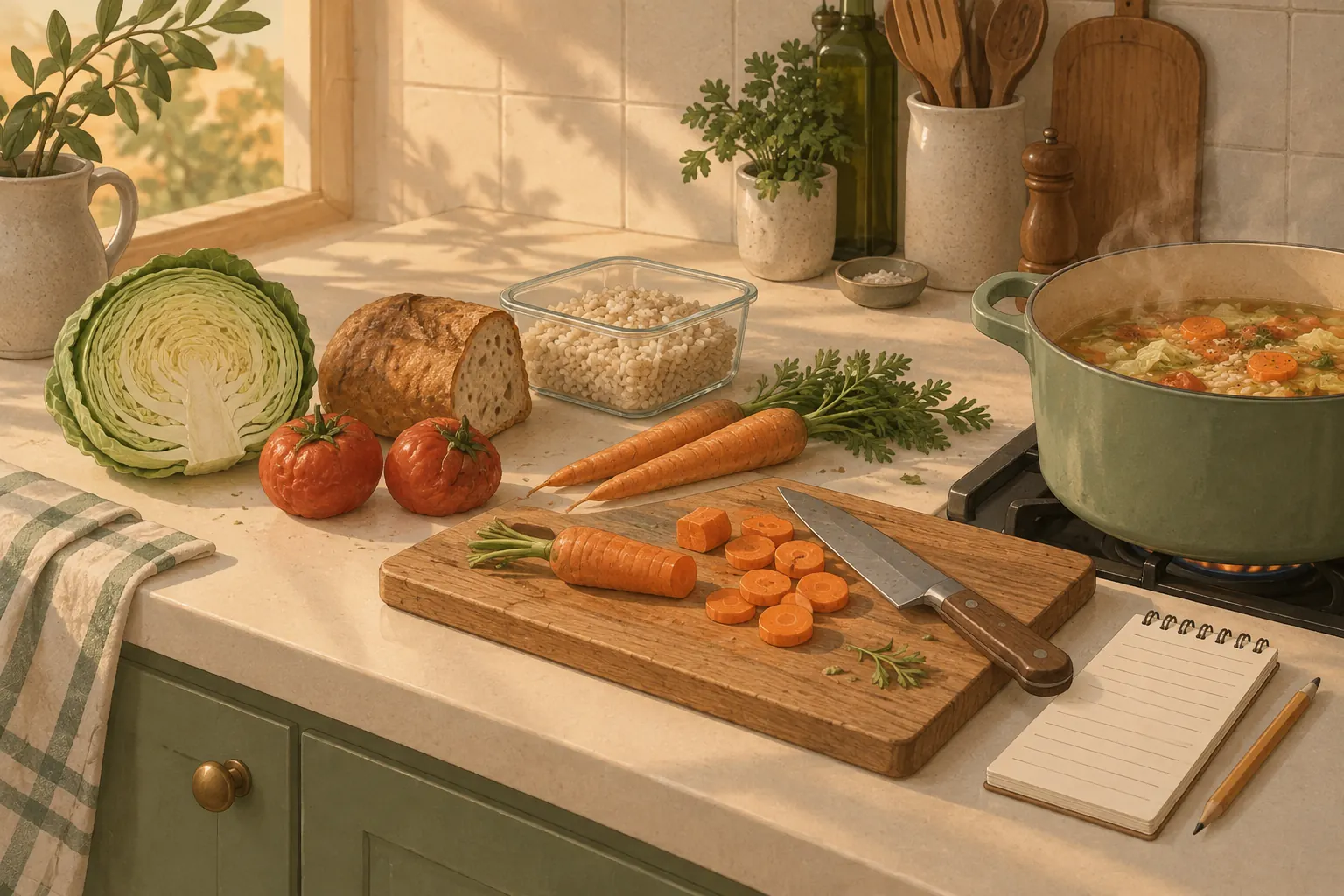
Most food thrown out at home is food nobody remembered until it had gone off, or food cooked in a bigger batch than anyone ate. The way to reduce food waste at home is to go after those two causes first, and treat composting, scrap broths and clever leftover recipes as the last step rather than the plan.
The habits that matter most, roughly in order of how much waste each one addresses:
- Check what you already have before every shop.
- Keep one "eat first" spot in the fridge and look at it daily.
- Buy for the next three or four days, not the next two weeks.
- Cook and serve smaller portions; save leftovers on purpose.
- Freeze food before its date, not after.
- Read "Best if Used By" as a quality date.
- Write down what you throw out for two weeks.
Why food gets wasted at home
Household food mostly gets wasted because it isn't used in time. UK research from WRAP found that just under half of avoidable household food waste was thrown away because it had gone off or passed its date, and another 31% because too much was cooked, prepared or served. Those two reasons together cover about 80% of it. The data is from 2012 and British, but the US advice from EPA and FDA targets the same two problems: planning what you buy and using what you have.
Wasted food costs a typical US household real money. EPA's 2025 report puts the cost at $728 per person a year for food bought and not eaten, or $2,913 for a household of four, about $56 a week. Date labels play a part too: FDA says confusion over them "accounts for an estimated 20 percent of consumer food waste" (FDA). Every other figure, with its data year, is in our food waste statistics.
Which food waste habits matter most?
The habits that matter most are the ones aimed at forgotten food and oversized portions, because those two causes account for most of what households throw out. Habits aimed at scraps and peels are fine, but they work on a much smaller pile.
| Why the food gets wasted | Habit that fixes it | Effort | Source for the cause |
|---|---|---|---|
| Forgotten until it went off or passed its date | Check stock before shopping; one "eat first" spot | Low, 5 minutes a week | WRAP, 2012 (just under half) |
| Cooked or served too much | Smaller portions, planned leftovers | Low | WRAP, 2012 (31%) |
| Bought more than the week needed | Shop for 3 or 4 days; bulk only for things you finish | Medium | ReFED names unplanned and bulk buying |
| Misread date labels | Treat "Best if Used By" as quality | Low | FDA (about 20%) |
| Stored in the wrong place | Fridge at 40°F or below; produce in the right drawer | Low, one-time | EPA, FDA |
| Leftovers never eaten | Label, freeze singles, eat within days | Medium | WRAP, 2012 (inside the 31%) |
| Scraps and peels | Stock, compost | Medium to high | EPA (divert what you can't prevent) |
If you only adopt the first two rows, you're working on roughly 80% of the problem as WRAP measured it.
Know what you have before you buy more
Knowing what's already in the fridge, freezer and cupboards is the cheapest way to stop throwing away food, because most of it is forgotten rather than spoiled on arrival. One of EPA's first planning tips is to check what you have before you shop.
A routine that takes about five minutes:
- Before writing the shopping list, open the fridge and look at every shelf, including the door and the back of the bottom shelf where the half tub of ricotta hides.
- Move anything that needs eating in the next two or three days to one "eat first" spot at eye level. FDA suggests exactly this: a designated place for foods that need using soon.
- Check the cupboard for duplicates. A third jar of cumin and a second open bag of rice are how a pantry fills up with things that expire in the dark.
- Write the list from the gaps, not from habit. If there's a bag of spinach in the "eat first" spot, Tuesday's dinner uses spinach and you don't buy more.
- Take a photo of the fridge on the way out. It's crude, and it stops the "do we have eggs?" guess in the store.
A written list of what you own and when it turns does the same job for the freezer and cupboard, where the photo won't help. Our pantry inventory list is a printable version, and the expiration date tracker covers the dates.
Keeping that list up to date by hand is the part people drop after two weeks. Duneed, our iPhone app, builds it from a photo of the grocery receipt, and flags each item as a date you set gets close (amber a few days out, red once it has passed). It doesn't guess the dates for you and it doesn't plan meals; it just keeps the list of what you bought and when you meant to use it.
How to stop buying too much food
Buying too much food is usually a trip-frequency problem: a single big shop has to guess what a household will eat twelve days from now, and fresh food doesn't wait that long. Shopping for three or four days at a time means fewer guesses.
Plan three or four dinners, not seven. The other nights will fill themselves with leftovers, a night out or something from the freezer, and planning seven meals means buying for seven. Our guide to meal planning from your pantry shows how to build those meals around what's already in the "eat first" spot.
Bulk deals are only cheaper if you finish them. A 5-pound bag of potatoes at a lower price per pound costs more than the 2-pound bag if half of it sprouts. The bulk buying break-even article works through the arithmetic. EPA's advice is the same in fewer words: buy in bulk only when you'll use it before it spoils.
How to store food so it lasts longer
Storing food in the right place keeps most fresh groceries at their best for longer, and the single most useful check is the fridge temperature. FDA and EPA both say the fridge should be at 40°F or below; a cheap fridge thermometer tells you whether it is.
The rest is placement. EPA's storage advice puts most vegetables (leafy greens, carrots, cucumbers, broccoli) in the high-humidity drawer and fruit plus rot-prone vegetables such as mushrooms and peppers in the low-humidity one. Some fruit gives off ethylene as it ripens and speeds up the produce next to it, so keep apples away from the lettuce. Potatoes, onions and garlic go somewhere cool, dark and ventilated, not the fridge.
For the full chart of what goes where, see how to store produce. If the fridge itself is the problem, how to organize your fridge covers shelves and zones. For the cupboard, first in, first out matters more than matching containers.
Cook and serve the right amount
Cooking and serving too much is the second-largest reason for household food waste in WRAP's data, which makes portion size a bigger lever than any scrap recipe. Cook a little less than you think, serve from the stove rather than piling plates, and let people go back for seconds.
Measure the foods people overcook by eye. Rice and pasta are the classic ones, because a dry handful looks small and swells. The serving size on the Nutrition Facts label is a reasonable starting point (FDA suggests using it for portions), and after a week you'll know whether your household eats more or less than that.
Planned leftovers are different from accidental ones. A pot of chili cooked for two dinners is a plan; half a pan of lasagna shoved in the back is a future bin bag. Put leftovers in a clear container, at the front, with the day written on the lid. USDA's guidance on how long they keep is summarized in how long leftovers last.
Freeze food before it turns, not after
Freezing food works as a pause button, but only if the food goes in while it's still good. FDA calls freezing "a great way to store most foods to keep them from going bad until you are ready to eat them." A limp, day-before-the-date chicken breast frozen today comes out as a limp chicken breast.
The foods most worth freezing early are bread (slice it first, so you can take two slices), grated cheese, ripe bananas, and meat you won't cook within a day or two of buying. Label everything with what it is and the date, as EPA recommends; unlabeled freezer bags become mystery bags within a month. Some foods freeze badly (salad greens, cucumbers, milk sauces, plain cooked pasta and rice), and can you freeze it lists them with the reason.
Read date labels as quality dates, mostly
"Best if Used By" is a quality date according to FDA, which supports it as the standard phrase for "the date when a product will be at its best flavor and quality." FDA also says that except for infant formula, manufacturers aren't required by federal law to put quality-based date labels on packaged food. For anything past its date, follow what FDA and USDA say for that food and look at the product; we don't make safety calls here.
UK and EU labels split the job differently, with "best before" for quality and "use by" for safety. The full breakdown for both sides of the Atlantic, including sell-by and state rules, is in best before vs use by vs sell by.
How to not waste food when you live alone
People living alone waste more food per person than larger households, and for a specific reason: WRAP's 2014 study found the gap comes from single-occupancy households not using food before it goes off or passes its date, not from making more leftovers. The same report notes that the right pack size can be hard to find, and smaller packs can cost more per pound.
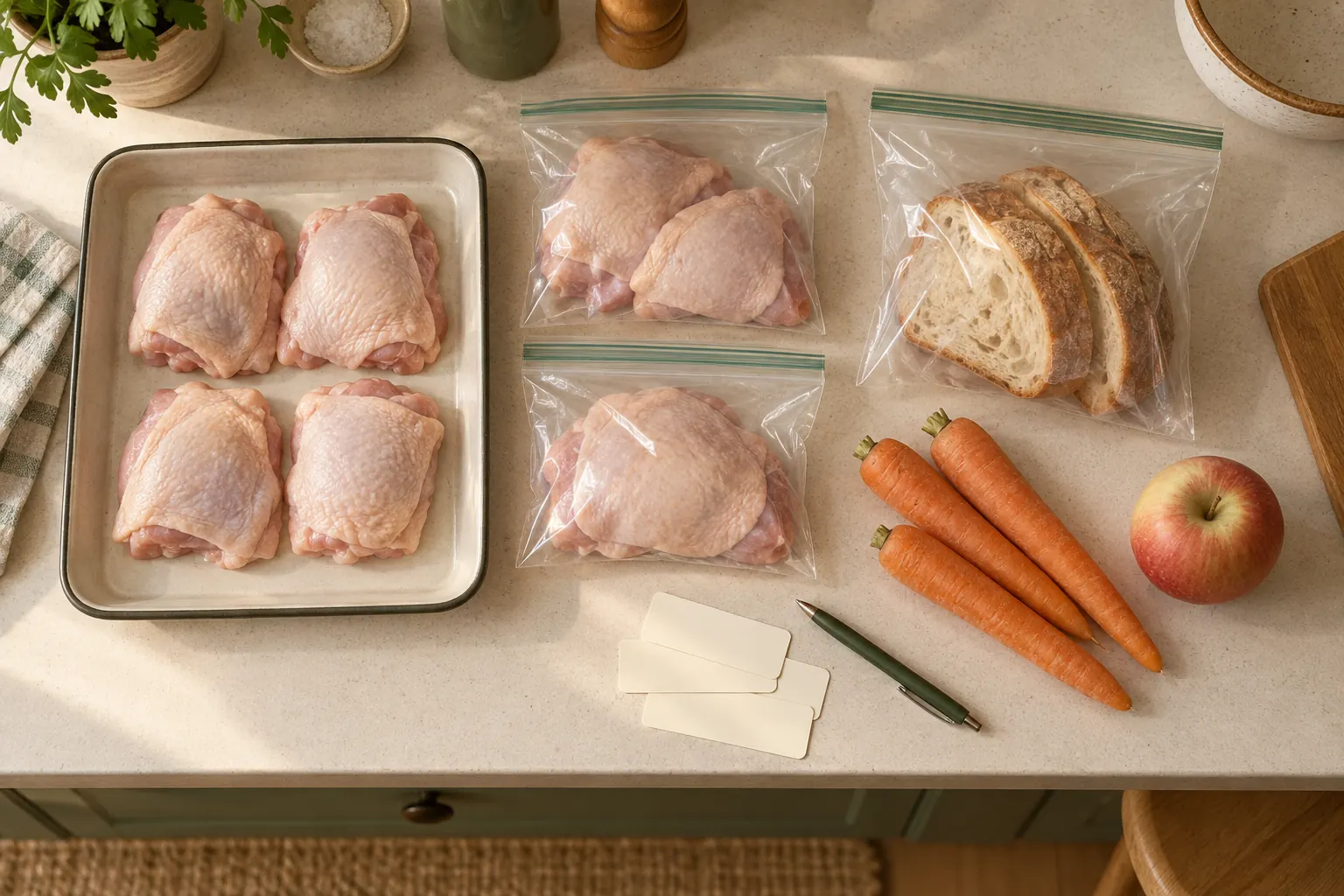
So the fixes for one person are about pack size and the freezer, not about eating up leftovers:
- Buy loose where you can. Three loose carrots beat a 2-pound bag you'll be eating for three weeks.
- Freeze in singles the day you shop. Split a pack of four chicken thighs into bags of one or two, and freeze half a loaf of bread straight away.
- Cook once, eat twice, freeze the rest. A recipe that serves four becomes two dinners and two frozen portions, not four nights of the same thing.
- Pick sturdy produce for the second half of the week: cabbage, carrots, apples and frozen peas last; berries and bagged salad don't.
- Split bulk packs with a friend or neighbor rather than skipping the lower unit price entirely.
- Plan fewer meals. When you're cooking for one, plans change more often, and WRAP's report says day-to-day changes hit small households' waste harder.
A single person's budget for the week is in the grocery budget for one person guide, if you want the dollar side too.
How to know if it's working
The only way to know if you're reducing food waste effectively is to count what goes in the bin for a couple of weeks. Keep a note on the fridge: item, rough amount, and why it went (forgot it, cooked too much, didn't like it). After two weeks the reasons column tells you which habit to work on.
Put a dollar figure on it once. Say the note shows half a bag of salad ($2), three bananas ($1), a quarter pan of pasta bake (about $3) and a tub of yogurt ($4) in one week. That's $10 a week, or $520 a year, from four items. The food waste calculator runs the same sum on your own grocery spend, and a 7-day pantry challenge is a good way to clear the backlog before you start counting.
Common questions
What is the easiest way to reduce food waste at home?
Check what you already have before you shop, and keep one "eat first" spot in the fridge. Forgotten food is the biggest single reason household food gets thrown out in WRAP's research, and both habits take minutes.
How much money can you save by not wasting food?
EPA estimates that the average American wastes $728 a year on food bought and not eaten, which is $2,913, or about $56 a week, for a household of four. Your own figure depends on what you buy and throw out, so a two-week tally is more useful than the average.
Is it safe to eat food after the best by date?
FDA describes "Best if Used By" as the date a product will be at its best flavor and quality. For whether a specific food is still safe, follow FDA and USDA guidance for that food rather than the label alone.
Does composting count as reducing food waste?
Composting keeps food out of landfill, but it doesn't stop the waste or the money spent on it. EPA lists diverting food, such as composting, as what to do with food you can't prevent from being wasted.
How do I stop throwing away leftovers?
Cook less to start with, put leftovers in clear, dated containers at the front of the fridge, and freeze any portion you won't eat within a couple of days. The time limits come from USDA and are in our leftovers guide.
Sources
- just under half of avoidable household food waste wrap.ngo
- EPA epa.gov
- FDA fda.gov
- $728 per person a year epa.gov
- FDA fda.gov
- ReFED refed.org
- not using food before it goes off or passes its date wrap.ngo
Found a mistake? Tell us and we will correct it: support@duneed.app